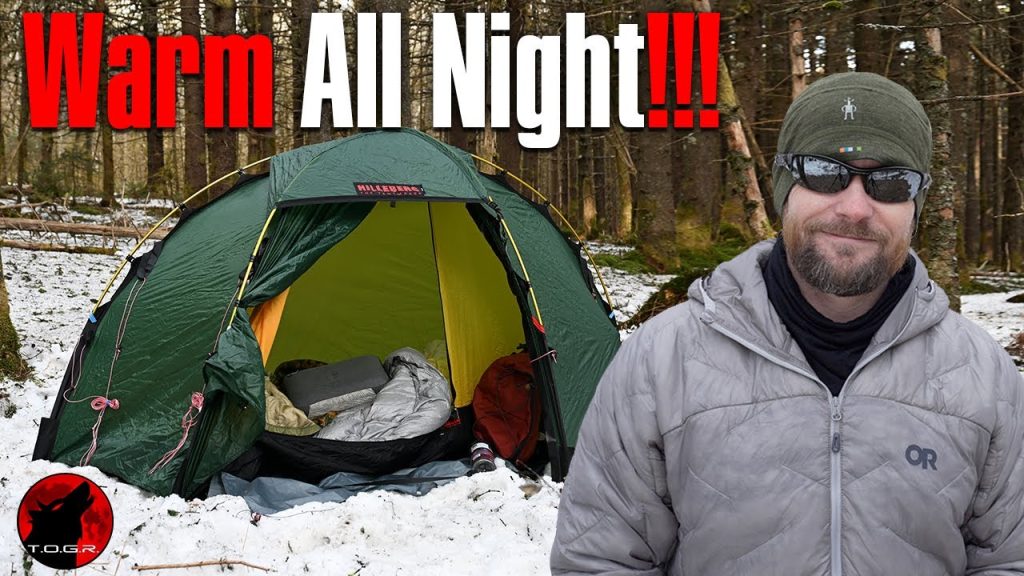
If you have ever stood at the top of a hill in expensive kit, shivering and wondering how everyone else looks comfortable, this is the fix. Staying warm outdoors is mostly about staying dry. You wear thin, breathable layers while you are moving so you do not sweat into them, and you add the thick, warm stuff the moment you stop. Get that timing right and cheap kit works. Get it wrong and no amount of layers will save you.
That is the whole idea, and the video below turns it into ten specific mistakes from your feet to your head. We are going to walk through them in order, add the bits the video leaves out, and give you a head-to-toe checklist you can use before your next cold day out.
Why this video?
There are hundreds of “how to stay warm” videos. Most of them are lists of things to buy. This one, from DJ at The Bear Essentials, is different because it teaches one principle and then applies it to every part of your body. Thin while you move, thick when you stop, and never let sweat build up. Every mistake in the video is a version of that rule being broken, which means you can remember the whole thing.
It also names the mistakes plainly, which is exactly the shape of a Trick-Tips article, it covers the head-to-toe kit in a sensible order, and there is no sponsor to sit through. At fifteen minutes it is longer than we would normally pick, but there is no padding, and the timestamps below let you jump straight to the part you need. Two runners-up worth your time if you want more: MyLifeOutdoors on the one big layering mistake, which explains the same principle in eight minutes with a sharper focus on shells, and Outdoor Boys with 24 tricks to staying warm, which leans towards sleeping out in serious cold.
The one rule everything else hangs off
As the video points out right at the start (0:20), the most important thing is staying dry. Once you have sweated into your layers and the cold gets into that damp fabric, you are cold for the rest of the day. Adding another jacket on top does not fix it, because the wet layer is still against your skin.
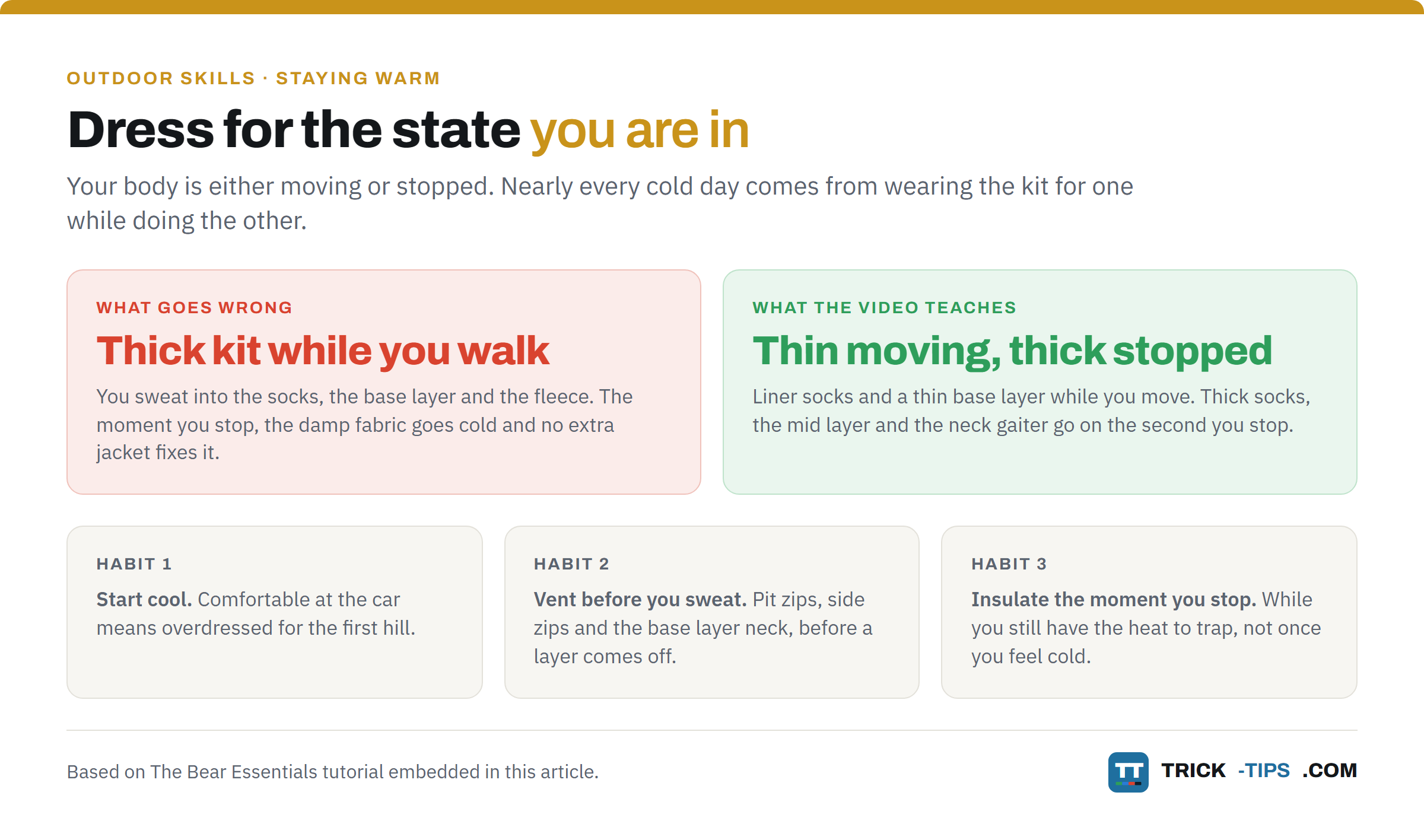
So the question to keep asking is not “am I warm enough?” but “am I about to sweat?” Your body has two states out there. Moving, when you are producing heat and moisture, and stopped, when you are producing neither. Nearly every mistake in the video comes from dressing for one state while you are in the other.
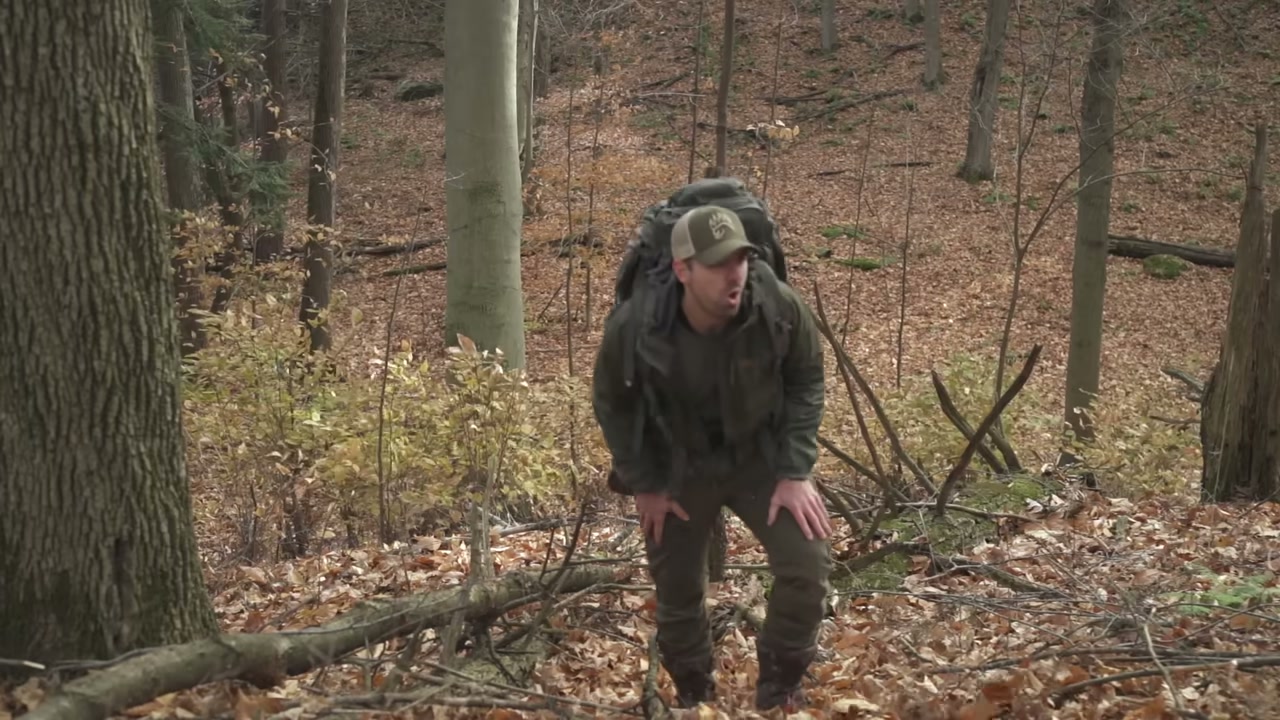
In short, walk out of the car park slightly cool, open zips before you feel hot, and put the insulation on the second you stop. Do that and most of what follows takes care of itself.
The ten mistakes, from your feet up
The video works from the ground up, so we will too. Each one has a timestamp so you can watch the bit you need.
Feet: thick socks at the wrong time, and boots that are too tight
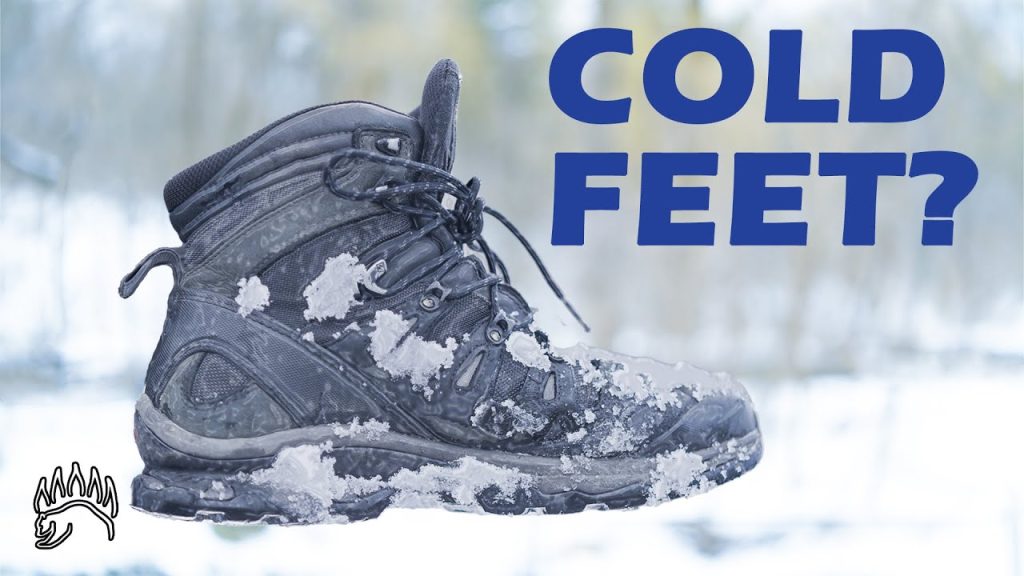
The first surprise is that your big wool socks are often the reason your feet are cold. As DJ explains at 1:04, if you wear them while you are walking, your feet sweat, and even merino cannot get that moisture out through a boot. When you stop, the damp sock goes cold and so do your toes.
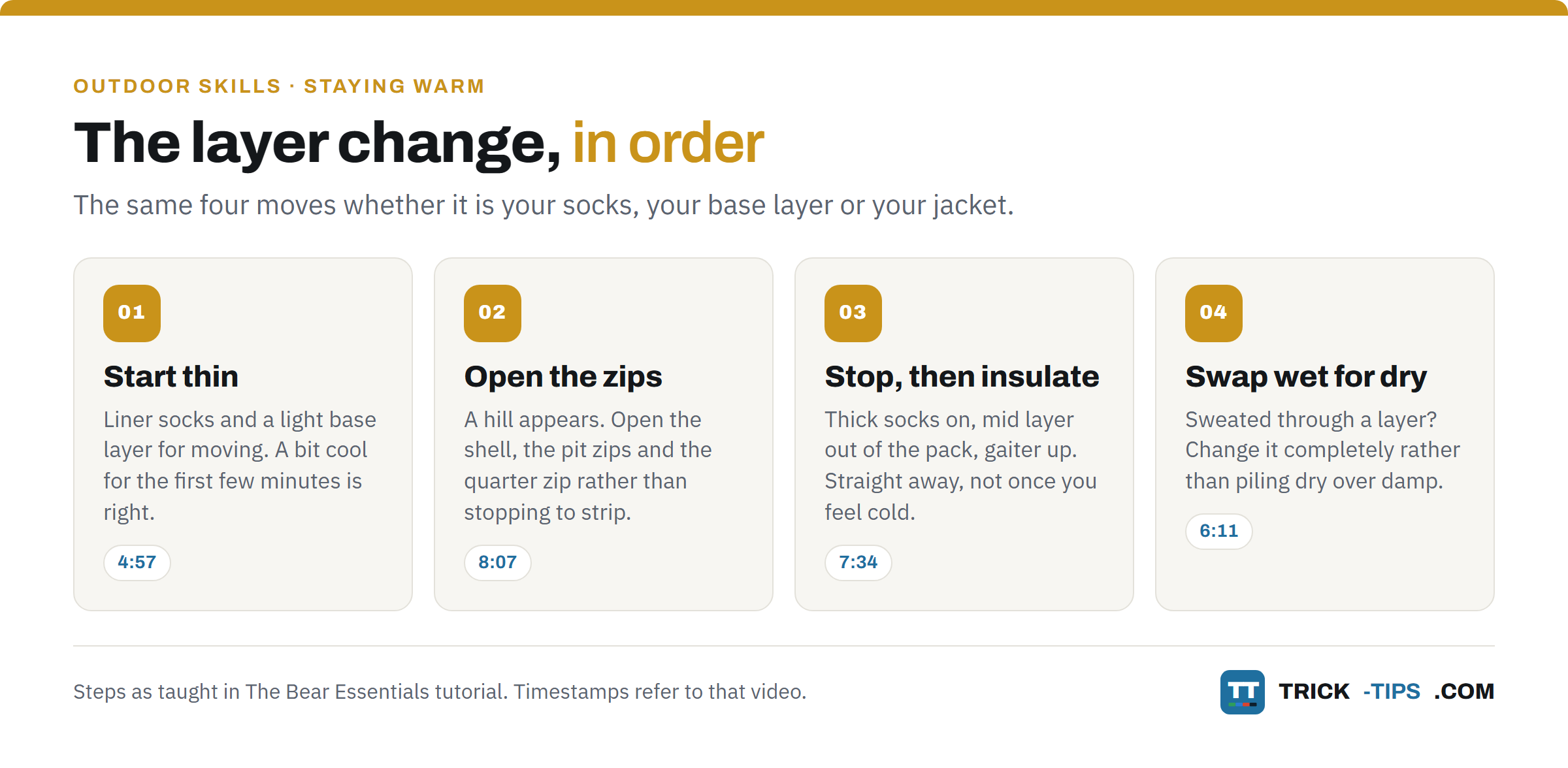
The fix (1:37) is a thin liner sock while you are active. Your feet will feel a bit cool for the first few minutes, then your body catches up. When you reach camp or stop for a proper break, that is the moment to pull on the thick sock over the top (2:09). If the liner has soaked through, swap it for the thick one rather than stacking wet on dry.
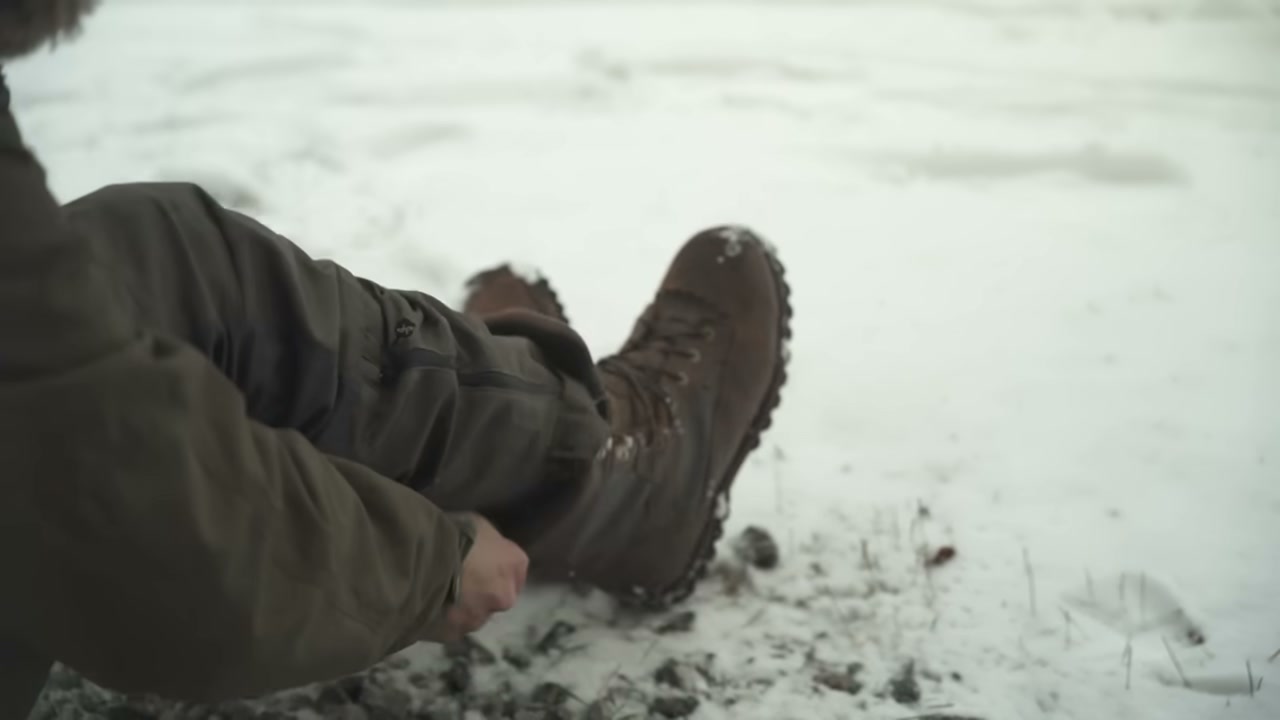
The second foot mistake is boot fit (2:30). A boot that feels perfectly snug with a thick sock on is squeezing your foot, and a squeezed foot has poor blood flow. The video’s rule is to buy winter boots a size bigger than you normally would, and to take your thick socks to the shop and walk around in them. You want a bit of wiggle room at the toes.
One bonus from the video (3:07). If you know you will be stopping and starting all day with no chance to change socks, antiperspirant on your feet stops the sweating before it starts. Not for everyone, but it works.
Underwear and base layer: cotton, and going too thick
This one catches nearly everyone. You have spent money on a merino base layer and then put it on over cotton pants (3:38). Cotton soaks up moisture and holds it against you, which is the opposite of what you want. Merino or synthetic underwear fixes it, or, as the video says, go without under the base layer.
Then the base layer itself. The mistake at 4:43 is buying the thickest, warmest-looking one in the shop. For moving, DJ recommends a thin base layer, around 150 weight (5:05), because it lets sweat escape and lets you cool down fast when you need to. The thick 250 to 300 weight base layers are designed to hold heat in, not to move sweat, so if you walk uphill in one you end up soaked (6:25).
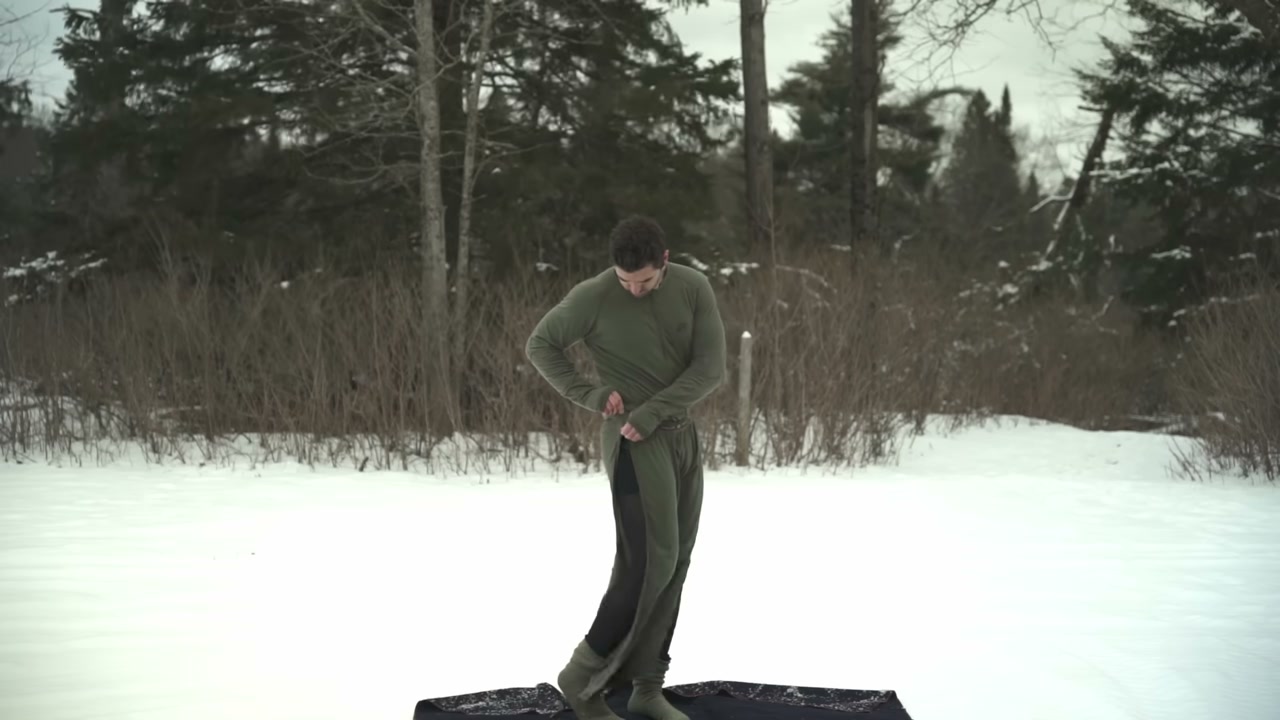
The strategy is the same as the socks. Thin one while moving, and when you stop, either put the thicker one over the top or, if you have sweated through, change it completely (6:00). The video also has a really practical tip for making this possible in the snow. Base layer bottoms with a zip all the way down the leg (6:48), so you can change them with your boots on, and a top with at least a quarter zip so you can dump heat while you walk (6:59).
Mid layer: wearing it while you work
The mid layer, your fleece or light insulated jacket, is for the stopped state. At 7:17 DJ says he almost never wears one while doing anything strenuous. It lives in the pack and comes out when he is setting up camp or having a proper rest.
If you want something in between, a gilet (the video calls it a vest, 7:40) is the answer. It keeps your core warm and leaves your armpits open, and your armpits produce a surprising amount of heat and sweat. And when you are ambling along in a mid layer and a hill appears, do not stop and strip. Open everything, shell, mid layer, quarter zip, and let the cold air in (8:07).
Shell: trusting “breathable”
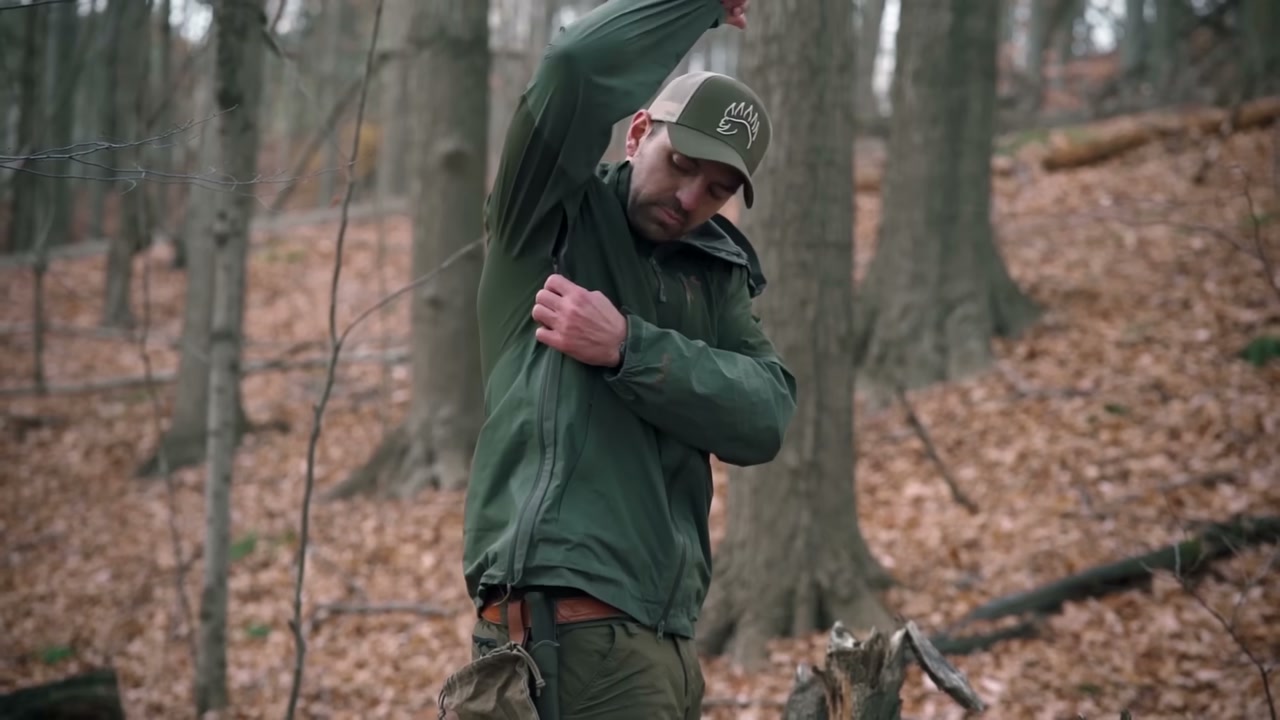
The big misunderstanding here is thinking a waterproof shell is completely breathable (8:19). As the video explains, membranes like Gore-Tex breathe reasonably when it is dry outside and become mostly waterproof when it is raining (8:47), and even in the dry they are overwhelmed by hard work. The answer is not a better fabric, it is ventilation.
So the two things to look for on a shell are armpit zips (9:18), which you can leave open even in rain, and full side zips (9:34), which let you vent passively and let a pack hip belt sit underneath. For steady, low-effort days with no storm forecast, a soft shell (9:47) is more breathable and usually goes straight over a base layer with no mid layer.
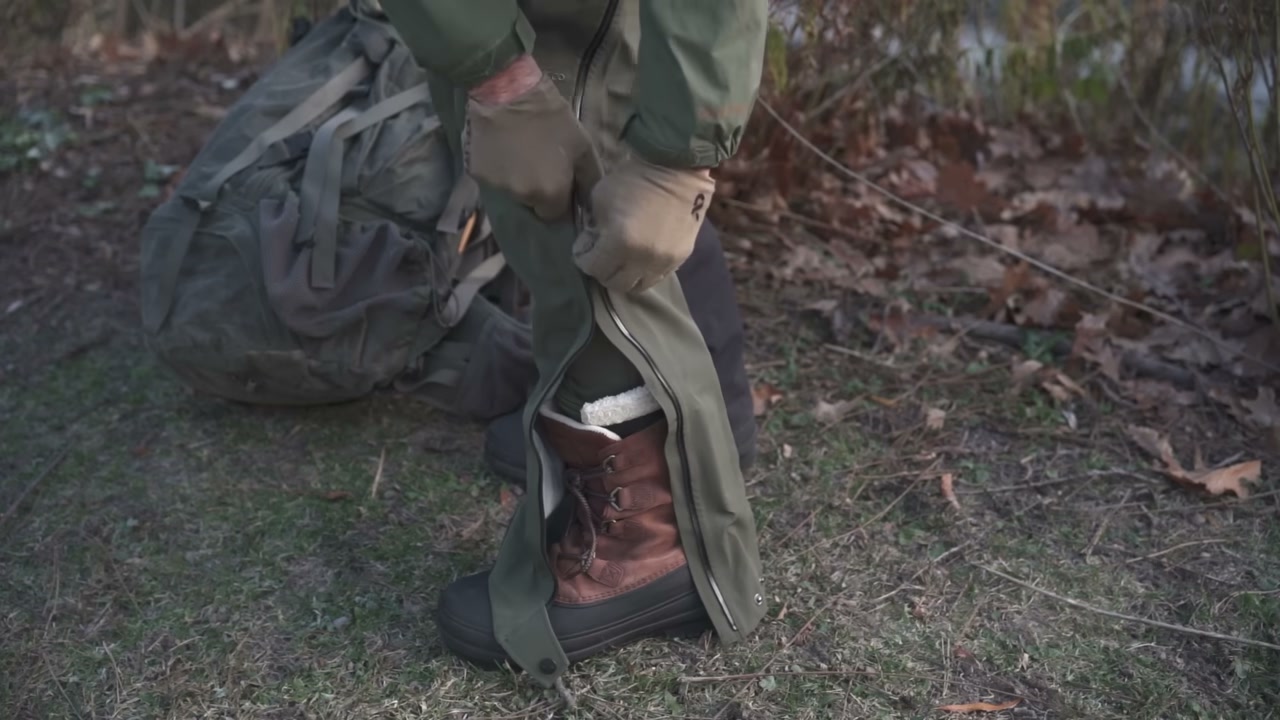
The same logic applies to your legs. DJ’s favourite over-trousers are soft shell (10:08), and whichever you buy, look for a zip all the way down the side so you can get them on and off over boots while standing in snow (10:15).
Hands: big gloves are not the warmest
Mistake eight (10:29) is assuming a big insulated glove is warmer than a mitt. It is not. Mitts keep your fingers together and are, in the video’s words, “hands down significantly warmer” (10:41). You lose some dexterity, but cold fingers in gloves lose it anyway.
The system that gives you both is a thin liner glove under an over-mitt (11:22). You pull your hand out of the mitt to tie a knot or work a zip and it is still covered. Good mitts come with a removable liner you can dry out or swap (11:09), and there is room inside for a hand warmer (11:37). The odd one at 11:42 is a surgical glove under everything for wet work like fishing. It acts like a wetsuit, and your fingers will be pruney, but it keeps the mitt dry.
Neck: the gap everyone forgets
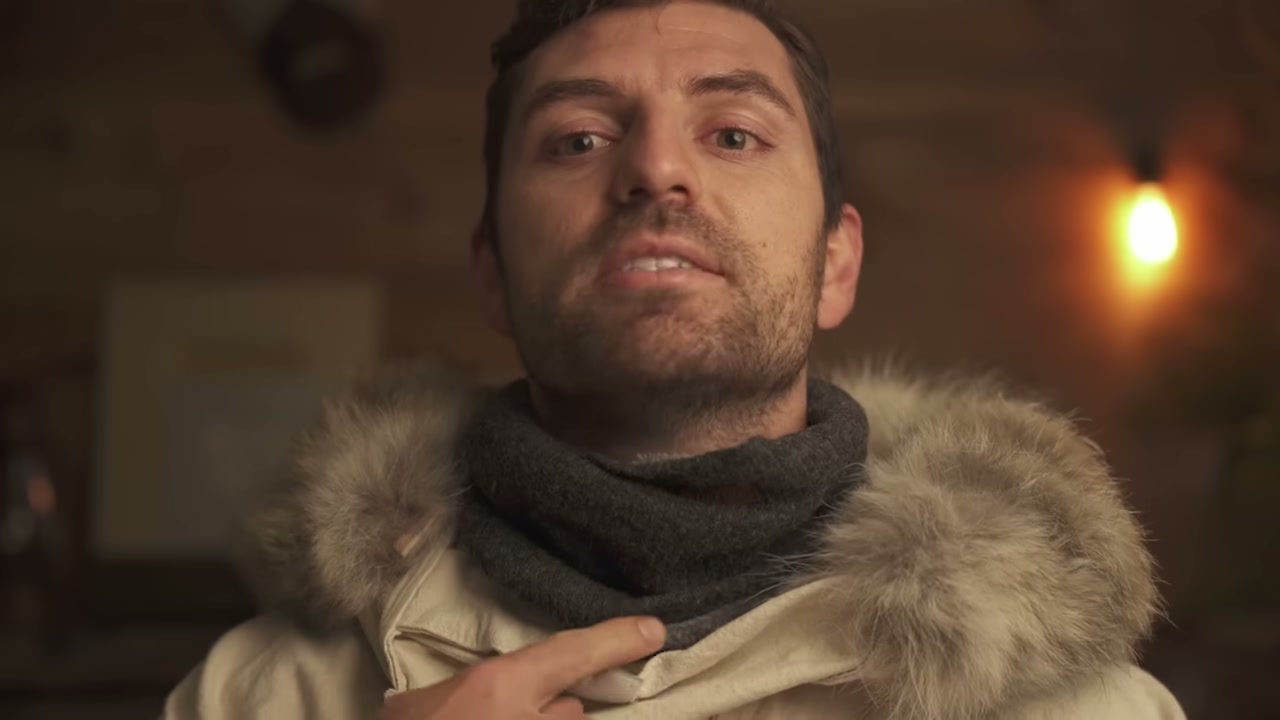
A neck gaiter or buff is cheap and very underrated (12:05). Like everything else, it is for the stopped state. Pull it up when you stop and it closes the gap at your collar so the warm air stops escaping (12:23). While you are moving, wear it as a headband over your ears instead (12:30). And do not breathe through it for long, because the condensation freezes and then it is useless (12:41).
Head: the wrong beanie
Last one (13:13). Most beanies are cotton or acrylic, which is fine for the walk to the shops. For a day where it will snow on your head, or a night out, the video’s advice is a 100 per cent merino hat (13:44), because wool keeps a good share of its warmth when it gets wet. DJ puts it at about 40 per cent (14:06).
The video’s closing point is worth repeating. None of this needs the latest kit. Wool socks, mitts and hats turn up cheap in army surplus shops and charity shops (14:24). Follow the principles and the labels do not matter much.
Head-to-toe quick reference
| Body zone | The mistake | The fix | In the video |
|---|---|---|---|
| Feet | Thick socks while walking | Thin liner while moving, thick sock when you stop | 1:04 |
| Boots | Snug fit with thick socks | A size up, tested with thick socks on | 2:30 |
| Underwear | Cotton under a good base layer | Merino or synthetic, or nothing | 3:38 |
| Base layer | Thickest one you can find | Thin (about 150 weight) for moving, thicker for stops | 4:43 |
| Mid layer | Worn while working hard | In the pack until you stop, or a gilet | 7:17 |
| Shell | Trusting the fabric to breathe | Pit zips and side zips, soft shell for dry days | 8:19 |
| Hands | Big insulated gloves | Liner gloves under mitts | 10:29 |
| Neck | No gaiter | Gaiter up when stopped, headband when moving | 12:05 |
| Head | Cotton or acrylic beanie in snow | Merino | 13:13 |
The three habits that fix most of it
- Start cool. If you are comfortable standing at the car, you are overdressed for the first hill. Take a layer off before you set off, not twenty minutes in.
- Vent before you sweat. Zips are faster than layers. Open the pit zips, the side zips and the base layer neck the moment you feel warm, and only take a layer off if that is not enough.
- Insulate the moment you stop. Do not wait until you feel cold. The thick socks, the mid layer and the gaiter go on straight away, while you still have the heat to trap.
Beyond the video
The video is about not getting cold in the first place. What it does not cover is what cold looks like when it has already gone too far, and since this site is read by people who ski, board, climb and ride in winter, it belongs here.
- Know the early signs of hypothermia, in yourself and in your mates. The NHS lists shivering, pale cold skin, slurred speech, slow breathing, and tiredness or confusion. The British Red Cross adds that the person may simply seem muddled and be breathing more slowly. Both say the same thing about what to do. Get them sheltered and off the ground, swap wet clothes for dry, cover their head, and give warm drinks and sugary food if they are fully awake. The NHS says not to use a hot bath or hot water bottle and not to rub their limbs. In the UK, call 999 and ask for police, then Mountain Rescue, if you are on the hill. A group that is confused and stumbling has stopped being a kit problem.
What to learn next
This is the first article in our new Outdoor Skills section, and the bottom rung of its ladder. The next rung is sleeping warm outside, which is a different problem (the ground, not your clothes) and gets its own article. If you are new to the site, Start Here explains how the grades work.
For the sports already on the site, the same principle applies on a chairlift as it does on a hill. Being properly warm before you drop in is half of warming up for a day of snowboarding, and there is a good piece on Bondringo about what to wear to keep warm and dry on the mountain.
If your cold days involve a map and a hill rather than a lift, staying warm is one skill of several. Bondringo teaches the rest, and its free Hill Walker’s Digital Safety Net course is the place to go for planning, navigation and what to do when a day goes wrong.
Frequently Asked Questions
Why am I cold even though I am wearing lots of layers?
Almost always because the layers are damp. If you wore your thick kit while you were walking, you sweated into it, and damp fabric against your skin pulls the heat out of you. Adding more on top traps the damp layer against your skin. The fix is to change the wet layer for a dry one, and next time wear less while you move.
Should I wear my thick socks while hiking?
No. Wear a thin liner sock while you are moving and keep the thick socks in your pack for when you stop. Thick socks make your feet sweat inside a boot, and the moisture cannot escape, so your feet go cold the moment you rest. Change into the thick pair at camp or at a long break.
Is merino better than synthetic for staying warm?
Both work, and the video uses both. Merino keeps a good share of its warmth when wet and does not smell, which matters on multi-day trips. Synthetic tends to move sweat faster and dries quicker. The one material to avoid is cotton, including cotton underwear, because it soaks up sweat and holds it against you.
Are mittens really warmer than gloves?
Yes. The video is blunt about it. Mitts are significantly warmer than gloves of the same weight, because your fingers share their warmth instead of each sitting in its own cold pocket. For jobs that need fingers, wear a thin liner glove under the mitt so your hand is never bare when you take the mitt off.
How do I stay warm when I stop for a break?
Put your insulation on immediately, before you feel cold, while you still have heat to trap. That means the thick socks, the fleece or insulated jacket, the neck gaiter pulled up and a warm hat. If you have sweated through a base layer, change it. Sit on something rather than on the ground, and eat and drink.
Do I need expensive kit to stay warm outdoors?
No. The video’s own advice is that the principles matter more than the brand, and that wool socks, mitts and hats are cheap in army surplus and charity shops. Spend the money, if you spend it at all, on a shell with pit zips and boots with room for thick socks.
Practise it on the next cold day out
Try one thing next time. Leave the car slightly cool, open your zips the first time you feel warm, and put your warm layer on the moment you stop rather than five minutes later. If you finish the day dry, you have got it.
Ask any questions in the comments below.