If you have ever lain awake in a tent at 3am, curled up, too cold to sleep and too cold to get out of the bag, this is for you.
Here is the short answer. Stay dry, and get off the cold ground. Most cold nights come from moisture, not from a bag that is too thin. Sweat, damp socks and your own breath inside the bag all rob it of warmth. And whatever is under you matters as much as the bag on top, because the ground pulls heat out of you all night.
So we are going to go through the habits that fix that, from what you sleep on to the last ten minutes before you zip up. Most of them cost nothing.
Why this video
We watched seven tutorials on sleeping warm for this one. Plenty of them are really gear reviews. One spent most of its half hour on heaters and rooftop tents, and another recommended running a gas heater inside the tent, which is dangerous (more on that below).
Luke at TheOutdoorGearReview does it differently. He hardly mentions brands. He builds everything around one principle, stay dry, and then walks through what that means at bedtime, from your face to your feet. Some of these tricks he says he has been using for over 20 years, and it shows in how practical it all is.
It is filmed in snow in the US, so the temperatures are in Fahrenheit, but every habit here works just as well on a damp October night in the Lake District.
Two others worth a look if you want more. Snowys Outdoors has the clearest demonstration of why a cheap air bed is so cold, and of venting a tent. MyLifeOutdoors is good if your problem is comfort rather than cold, with a lot on wider mats and pillows.
Keep your face out of the bag
This is Luke’s first tip, and it is the one most people get wrong (0:30).
When you are cold, the natural thing is to pull your head right down inside the bag and breathe into it. It does warm you up, for a bit. But every breath puts moisture into the insulation, and as he puts it, moisture and condensation are the death of a sleeping bag (0:35). A damp bag loses a lot of its warmth and takes ages to dry.
So keep your face outside your sleeping bag, no matter what (0:39).
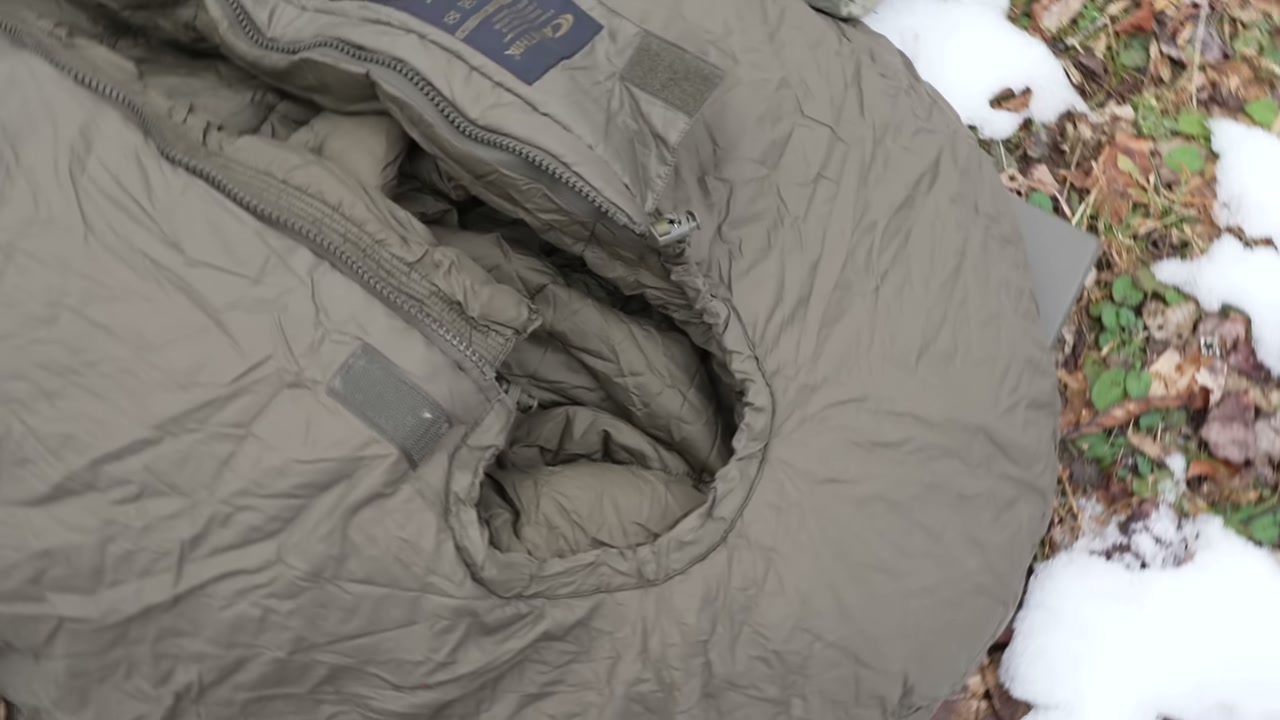
If your face gets cold, that is what a hat and a face mask are for, which we come to below.
Do not go to bed in every layer you own
This one sounds backwards (1:11).
The temptation is to climb in wearing everything, long johns, mid layer, down jacket and all. You are toasty, you fall asleep, and then you start to sweat. Your sleeping bag should be doing the job of keeping you warm, not your clothes.
Luke’s advice is to get in with less on and add clothing only if you are still cold (1:40). That way you do not sweat, your clothes stay dry and so does the bag. Sweat in the night and the moisture evaporates, and that is exactly how your body cools itself down (2:01). Then you are cold, damp and miserable when you get up.
This is the same idea as our staying warm outdoors guide, where the rule is to dress for the state you are in. In bed you are about as still as you will ever be, so let the bag do the work.
Change your socks, and keep wet kit out of the bag
As you get into your bag, take off the socks you have worn all day and put on a fresh, dry pair (2:35). Day socks are nearly always damper than they feel.
Luke also puts a hand warmer in each sock, under his toes (2:47). He is clear about the caveat. If you have any problems with circulation, do not do this, because they get warm (3:01).
And a tip on the way past (3:32). Anything wet, damp or sweaty stays out of your sleeping bag. It only adds moisture to the thing you are relying on to stay dry.
Hat on, and a mask for your face
Wear a beanie to bed (3:43). Then, for your face, a mask or a buff (3:55). Luke uses a merino wool one, and says you can make your own from an old merino top.
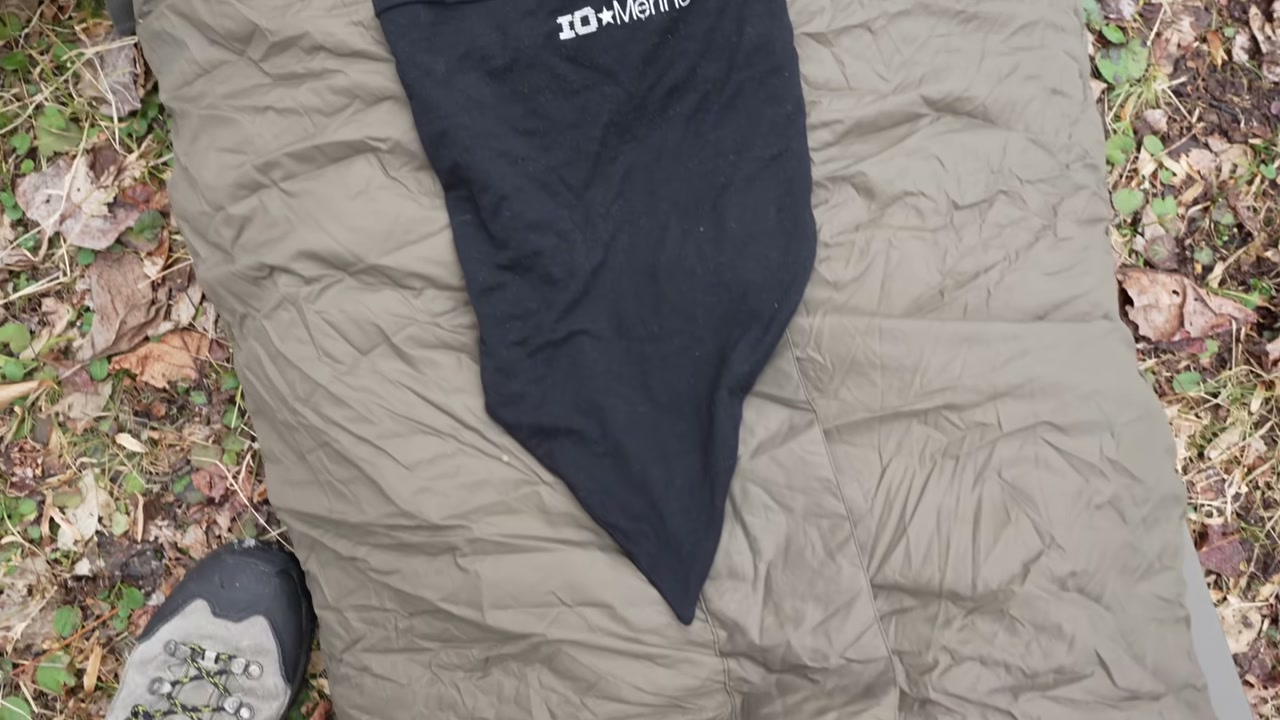
This is what lets you keep your face outside the bag on a properly cold night. Warm face, dry bag.
Two mats beat one
Your sleeping bag is only as good as the mat underneath it (4:47).
The cold ground pulls heat away from you through direct contact, which is conduction (4:53). And as several of the other videos we watched point out, the part of your sleeping bag underneath you is squashed flat by your weight, so it insulates very little. The mat is doing that job.
For cold weather Luke recommends at least two layers under you (4:58). His setup is a closed-cell foam mat on the ground, with his inflatable mat on top (5:01).
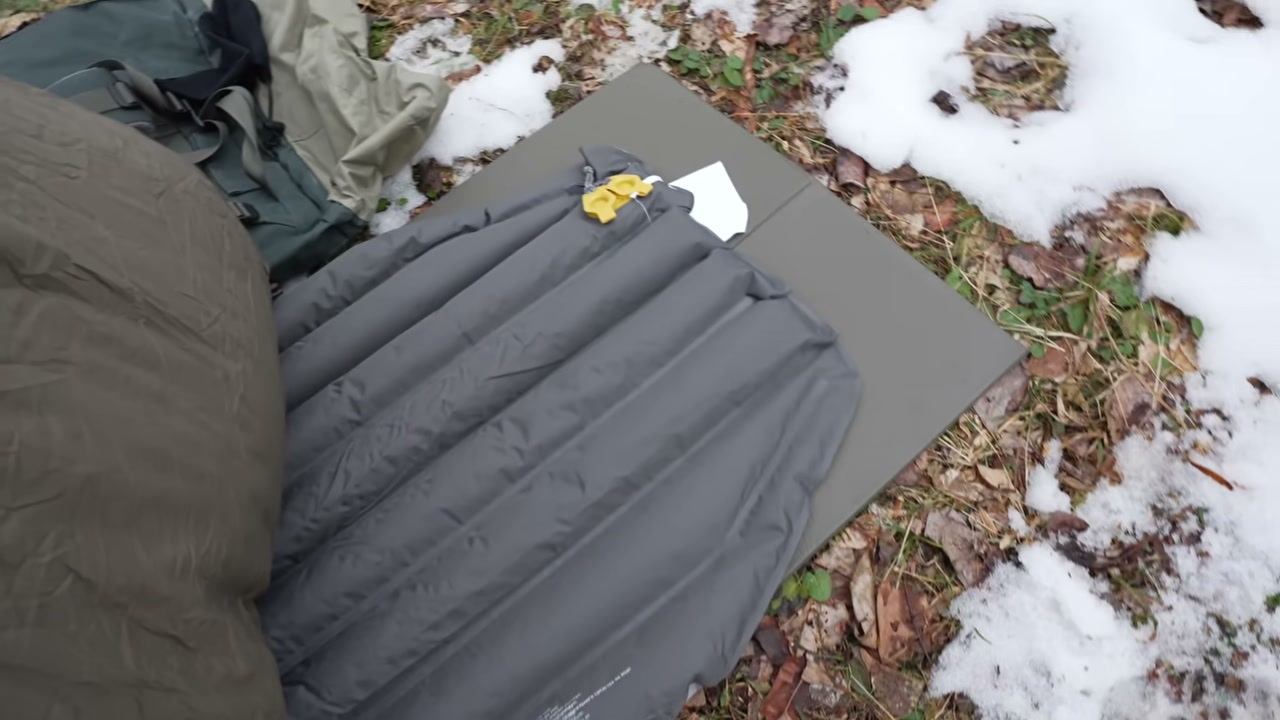
The UK’s Camping and Caravanning Club says the same in its winter advice. Double up on mats, because winter ground is far colder than summer ground.
The hot water bottle trick
Fill a bottle with hot water and take it into the bag with you (5:09).
Here is the detail most people miss. You will be tempted to put it down by your feet, but Luke says the better place is between your legs (5:24). His reasoning is that big arteries run through there and carry the warmth round your body.
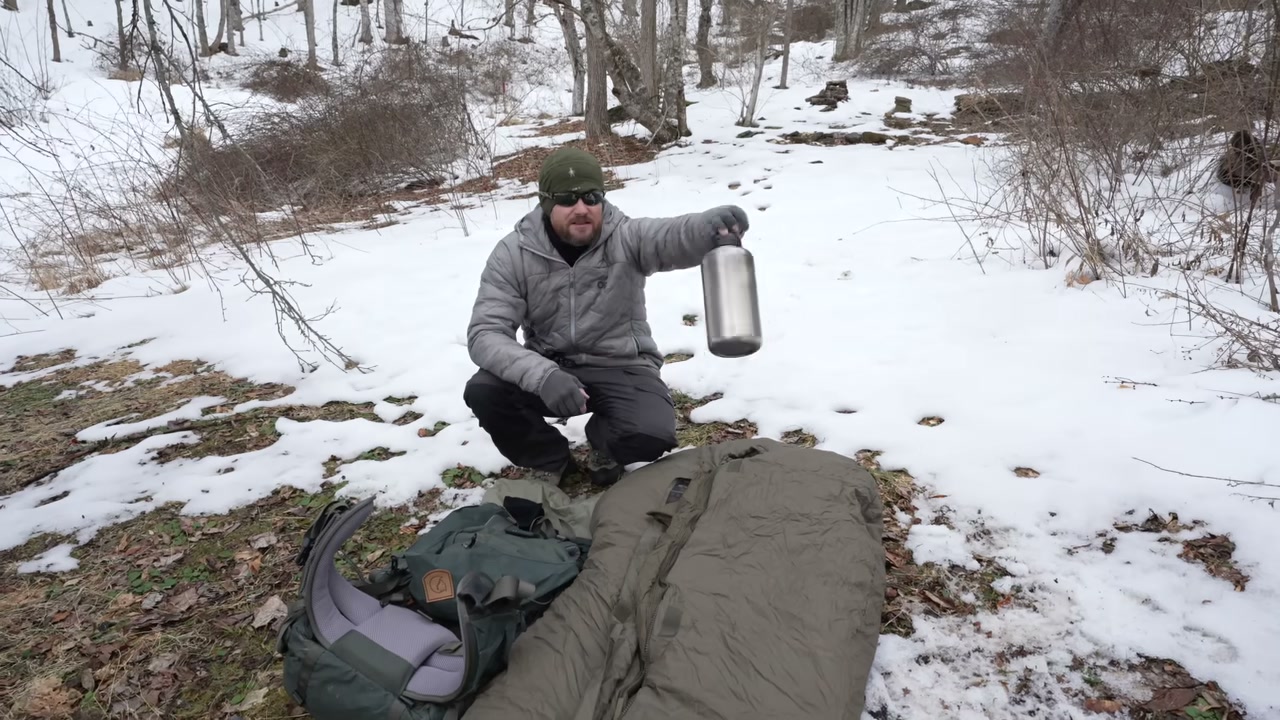
He uses a stainless steel bottle. Whatever you use, follow his rules.
- The lid must be on tight, and it must be a bottle you know does not leak (6:01). A soaked sleeping bag on a cold night is a genuine problem.
- Boiling water makes the bottle dangerously hot. Wrap it in something, a sock or a spare top, so you do not burn yourself (6:12).
Eat before bed, and go to the loo
Eat something shortly before you go to sleep (6:29). As Luke explains it, your body warms up as it digests, and his pick is high-fat food because it takes longer to break down. His examples are chocolate, cheese and nuts (6:52).
And if you need to go, go (6:57). Do not lie there holding it. Get up, go, and get back in.
Do not trust the rating on the bag
Never assume the temperature rating on your sleeping bag is right for you (7:34). Everybody runs differently. If you are a cold sleeper, a bag rated for the night’s low might leave you shivering.
So test your sleep system before you rely on it (8:03). A night in the garden, or a campsite close to the car, is a cheap way to find out. That is far better than finding out on a hillside.
Get the fit right
A bag that is too small squashes the insulation wherever it is tight. A bag that is too big leaves dead space, cold pockets you roll into as you turn over (8:26).
If yours is too big, Luke’s fix is to fill the empty space with clothing or kit (8:47). It must be dry and clean.
Warm up before bed, without sweating
His last tip, and a good one (9:16). If you are cold when you go to bed, the bag has to warm you up first, which takes a long time.
So move before you get in. A few squats, press-ups or star jumps, until you are warm. Then stop. The whole point is that you do not sweat (9:21), because that takes you right back to tip one.
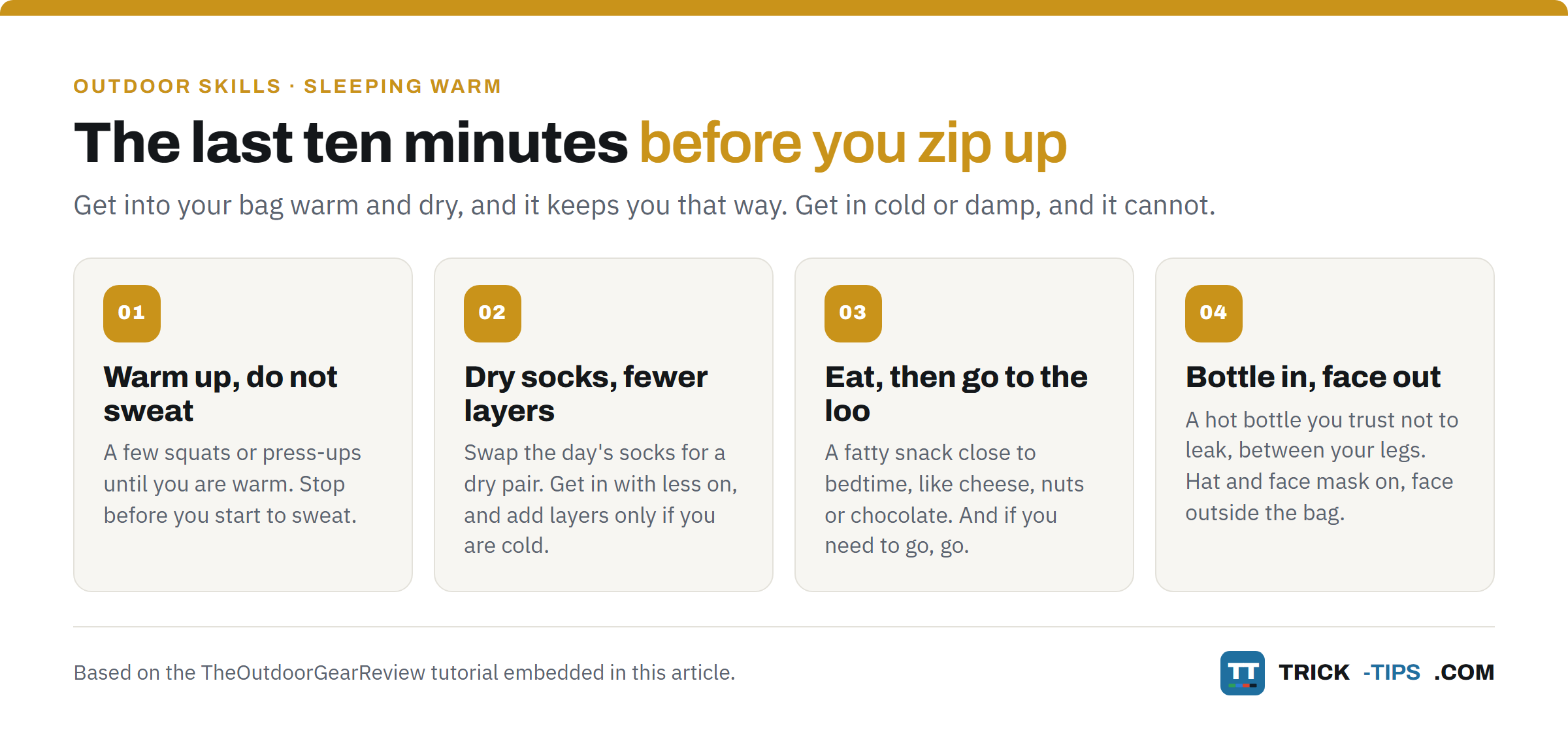
The three things that fix most cold nights
Stay dry. No damp socks, no sweating in the bag, no breathing into it, no wet kit inside it.
Get off the ground. Two mats in cold weather, closed-cell foam underneath.
Go to bed warm. Eat, go to the loo, warm up without sweating, then get in.
Beyond the video
A few more things that the video does not cover, all checked against more than one source.
Pitch out of the hollows. On clear, still nights, cold air is denser than warm air and drains downhill, collecting in valley bottoms and dips. These spots are called frost hollows, and they can be several degrees colder than the slope just above. Somewhere a little way up the side of a valley, with some shelter from the wind, is usually a warmer pitch than the flat bit at the bottom.
Open the vents, even when it is cold. You breathe out a surprising amount of moisture overnight. In a tent that is zipped up tight, it condenses on the walls and on your sleeping bag. The Camping and Caravanning Club advises opening the vents in winter to cut condensation, and it feels backwards but a dry tent is a warmer one.
Mat R-values add up. A mat’s R-value is how well it stops heat escaping into the ground, measured to a standard test (ASTM F3340), and higher is warmer. Alpkit’s guidance is that R-values are additive, so a foam mat under an inflatable adds its number to the total. Roughly, this is what the ratings are for.
| Conditions | Mat R-value to look for |
|---|---|
| Summer | 1 to 2 |
| Spring and autumn | 2 to 4 |
| Winter, and nights below freezing | 4 and above |
Never take a stove, barbecue or heater into your tent
This is the one that kills people. Carbon monoxide from anything that burns fuel, a gas stove, a heater or a barbecue that looks like it has gone out, builds up in a tent or porch, and you cannot see or smell it. It carries on coming off a cooling barbecue for hours.
The British Mountaineering Council says it is always safer to cook outside your tent, and never to sleep with a stove running. Warm up by the stove or the fire before bed, then leave it outside.
Headaches, dizziness, nausea, confusion or unusual tiredness in a tent are warning signs. Get into fresh air straight away, and if someone is unwell, dial 999.
What to learn next
This is the second rung of the Outdoor Skills ladder. If you have not read it yet, how to stay warm outdoors covers the daytime half, what to wear while you are moving and when you stop. Everything else in the section lives on the Outdoor Skills hub.
If sleeping out is part of getting into the hills, the navigation side is where to go next. Our friends at Bondringo have a free course, The Hill Walker’s Digital Safety Net, that covers the essentials.
Frequently Asked Questions
How can I sleep warmer in a tent without buying new kit?
Stay dry and get off the ground. Change into dry socks, do not sleep in every layer you have, keep your face out of the bag, and put anything you can under your mat. Then eat before bed, go to the loo, warm up without sweating and take a hot water bottle in with you.
Should you wear clothes in a sleeping bag?
Wear something, but not everything. TheOutdoorGearReview’s advice is to get in with less on and add layers only if you are cold, because if you overdress you sweat, and damp clothing makes you colder. Dry socks, a hat and a dry base layer are a sensible starting point.
Why am I cold in my sleeping bag?
Usually one of three things. Moisture, from sweat, damp socks or breathing into the bag. Heat loss into the ground, because your mat is not insulating enough. Or a bag that does not fit, with cold dead space or tight spots that squash the insulation. The temperature rating may also simply be too optimistic for you.
Where should you put a hot water bottle in a sleeping bag?
Between your legs, rather than down by your feet, according to the video. Use a bottle that cannot leak with the lid done up tight, and wrap it in a sock or a spare layer so it does not burn you.
Is it better to use two sleeping mats?
In cold weather, yes. A closed-cell foam mat on the ground with your inflatable mat on top is warmer than either on its own. R-values are additive, so the two ratings add together.
Should I close the vents on my tent when it is cold?
No. Leave the vents open. Your breath puts a lot of moisture into the tent overnight, and without ventilation it condenses on the walls and your sleeping bag, which makes you colder.
In short
A warm night comes down to staying dry, getting off the cold ground and going to bed warm. None of that needs a more expensive sleeping bag.
Next time you camp, try just three things. A second mat underneath, dry socks and fewer layers as you get in, and your face outside the bag with a hat on. See how much difference it makes.
Ask any questions in the comments below.