
To bunny hop a mountain bike, you lift the front wheel first, then unweight and lift the rear, so the whole bike clears an obstacle in one movement. The fastest way to learn it is the stick method. You lay a stick on the ground and use the bump of each wheel hitting it as your trigger to pull up. It breaks the move into four steps you can drill one at a time, and it gets your wheels off the ground almost immediately.
Why this video is the one to learn from
There are hundreds of bunny hop tutorials out there, and most of them show you what a good hop looks like without telling you when to actually do anything. Timing is the whole trick, and that is exactly what this Global Mountain Bike Network video solves. The stick gives you a physical trigger you can feel through the bars, so instead of guessing when to pull up, the bike tells you. If you have tried to bunny hop before and just ended up doing a feeble two-wheel jump, this approach is the fix.
What do you need before you start?
- A stick. Genuinely. Something arm-length and thick enough to feel through your tyres, but soft enough to roll over safely. You will swap it for a smaller one later.
- Flat, open ground. A quiet car park, field or fire road. You want to practise the movement, not dodge trees.
- Basic front wheel lifts. You do not need a full wheelie, but being comfortable getting the front wheel up helps a lot. Our guide to getting better at wheelies in a day covers that groundwork.
- Flat pedals help. You can learn clipped in, but flats force you to learn the real technique of scooping the bike up with your feet rather than cheating by pulling on the clips.
How do you bunny hop? The four steps
The video breaks the whole move into four parts: pull up, trigger, target and landing. Here is each one, with where to find it in the video.
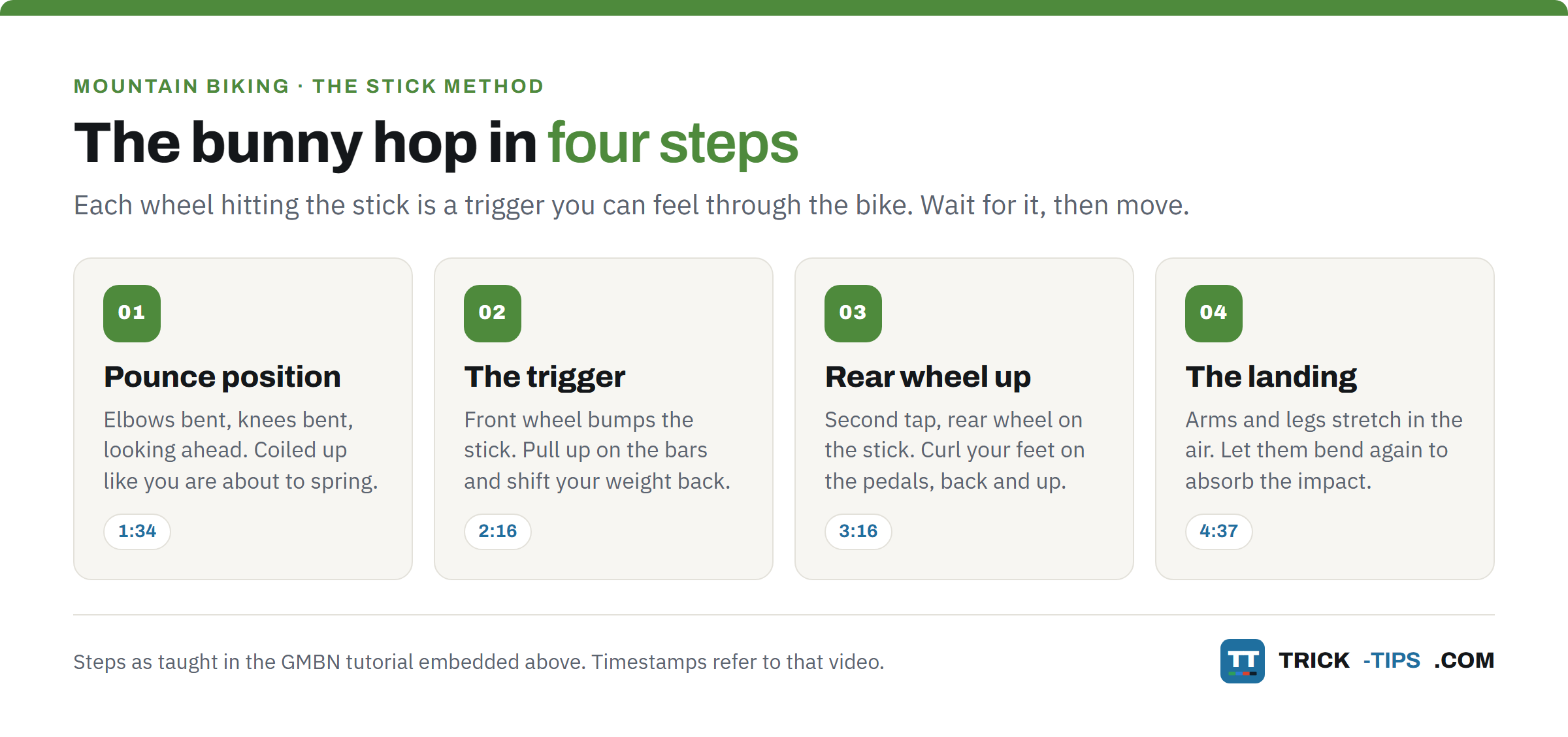
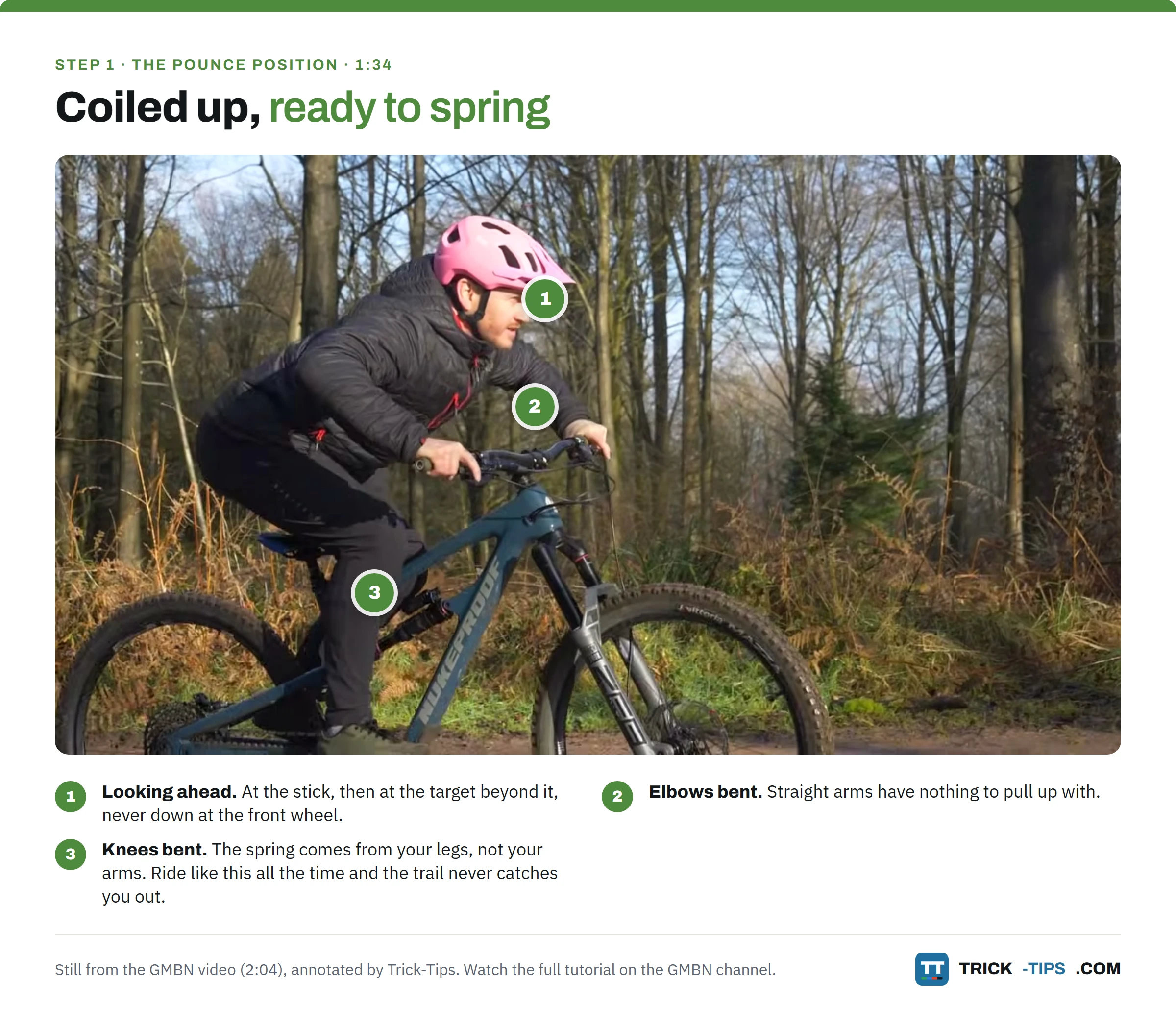
1. Get into the pounce position (1:34)
Before anything leaves the ground, get your body ready: elbows bent, knees bent, looking ahead, coiled up like you are about to spring. If your arms and legs are straight, you have nothing to pull up with. As the video points out, you should really be riding in this ready position all the time anyway, because the trail rarely warns you before it throws an obstacle at you.
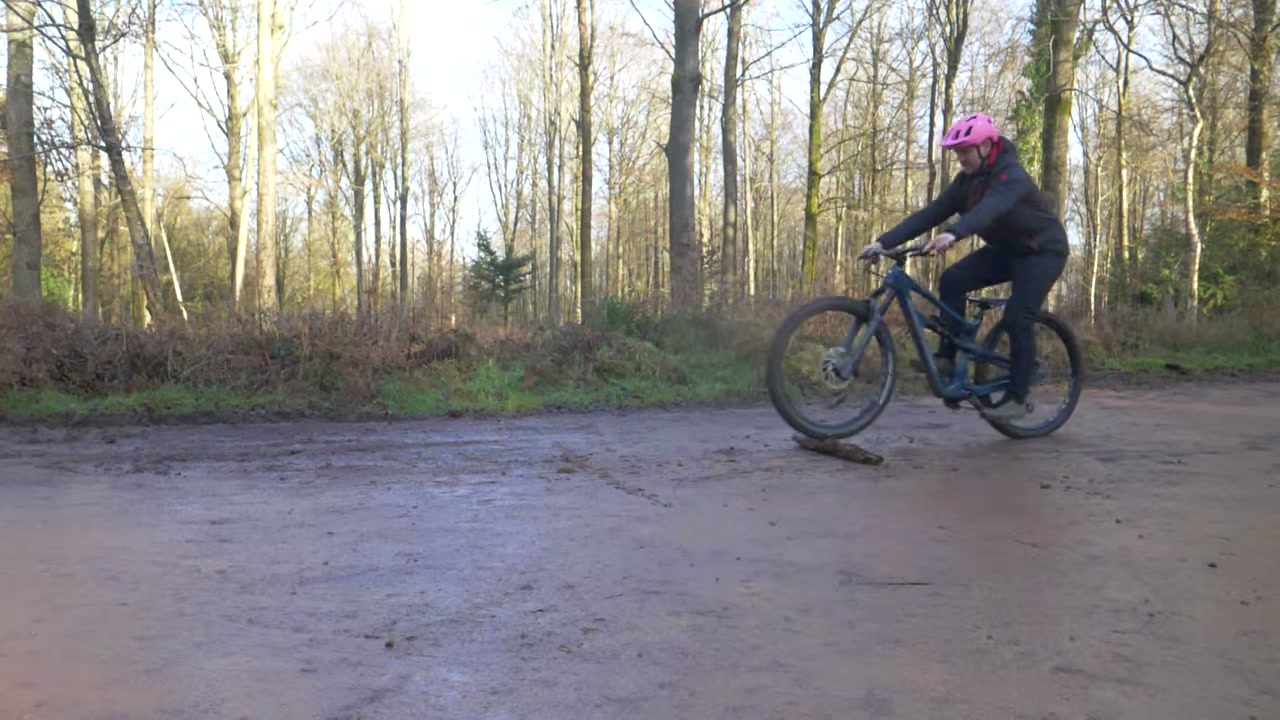
2. The trigger, when your front wheel hits the stick (2:16)
Roll at the stick in your pounce position. The moment you feel the front wheel bump it, that is your trigger. Pull up on the bars and shift your weight back. Do not worry about the rear wheel at all yet. Just repeat this over and over, timing the pull with the bump, until you are getting a good confident lift every single time. That bump-then-pull feeling is the timing that most people never learn, and it is the whole reason the stick method works.
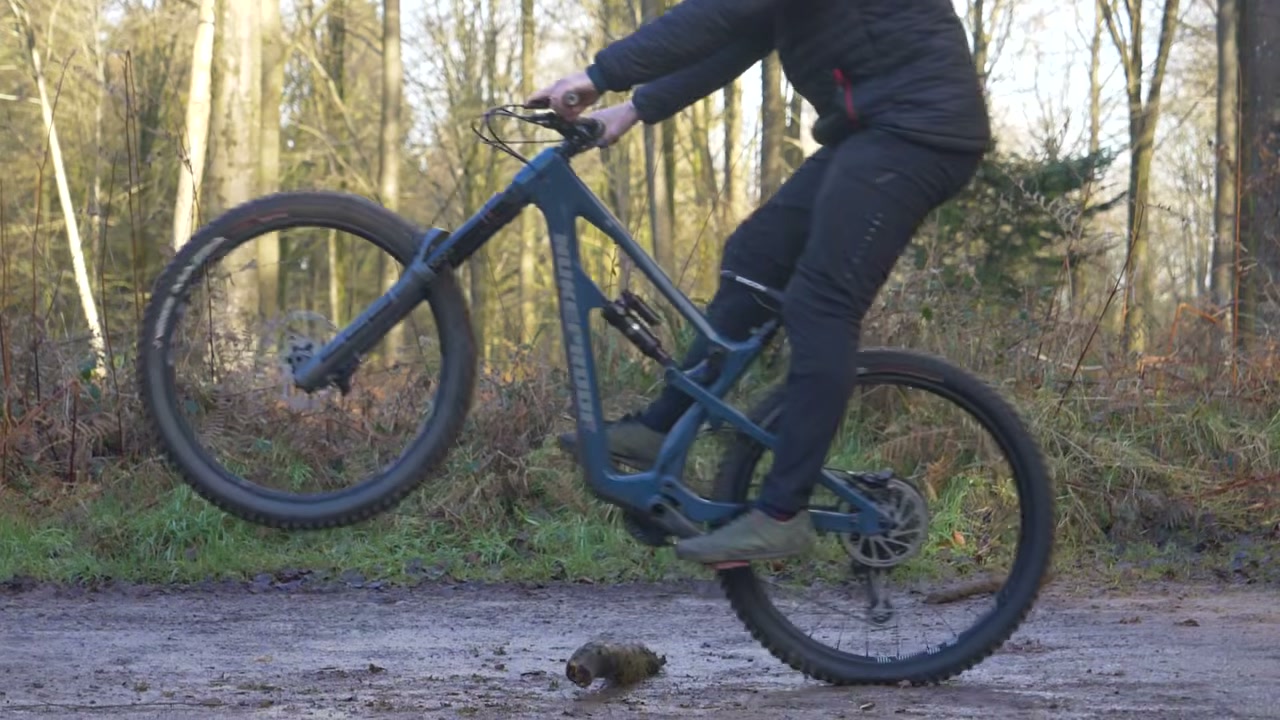
3. Bringing the rear wheel up (3:16)
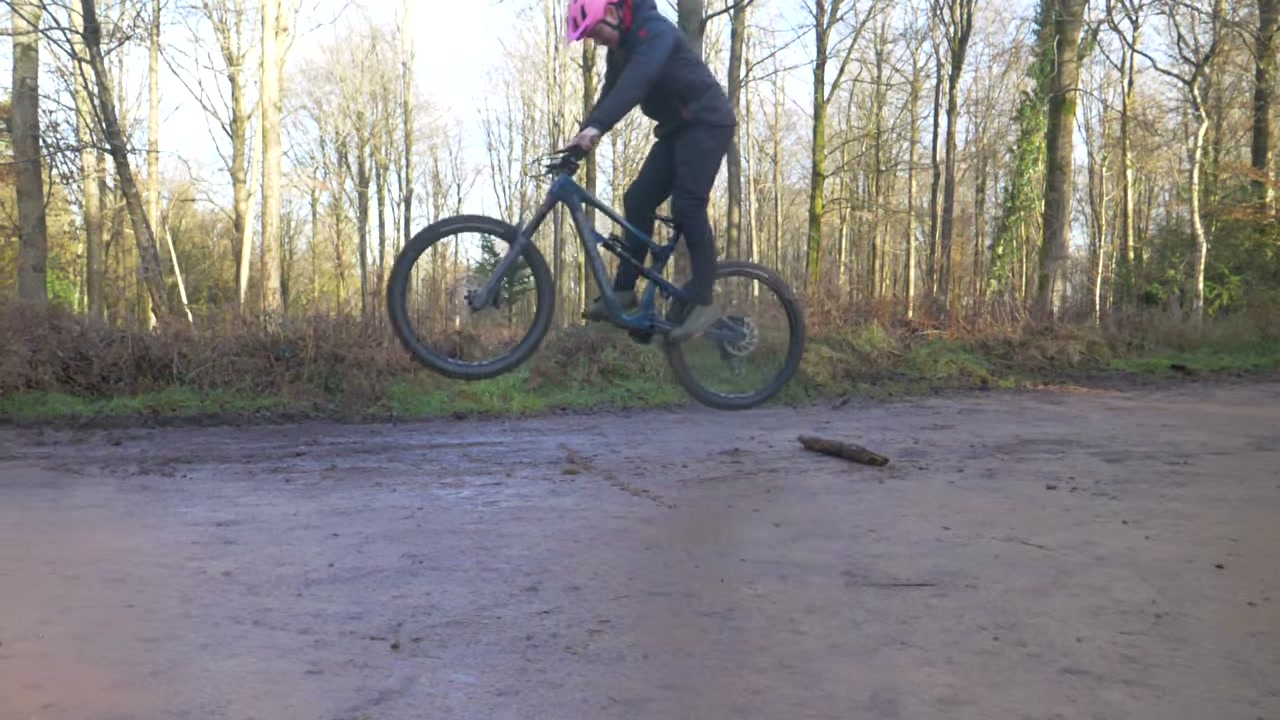
Once the front lift is dialled, keep the front wheel up and wait for the second tap, the rear wheel hitting the stick. That is trigger number two. As soon as you feel it, curl your feet on the pedals, pushing back and up, and let the bike’s momentum off the stick bring the rear wheel into the air. Now both wheels are off the ground. That is a bunny hop.
4. The landing (4:37)
In the air your arms and legs naturally stretch out. Use that. Let them bend again on impact to absorb the landing through your whole body rather than slamming down stiff. A smooth landing is what turns the bunny hop from a party trick into something you can use at speed on real trails.
How do you progress from the stick?
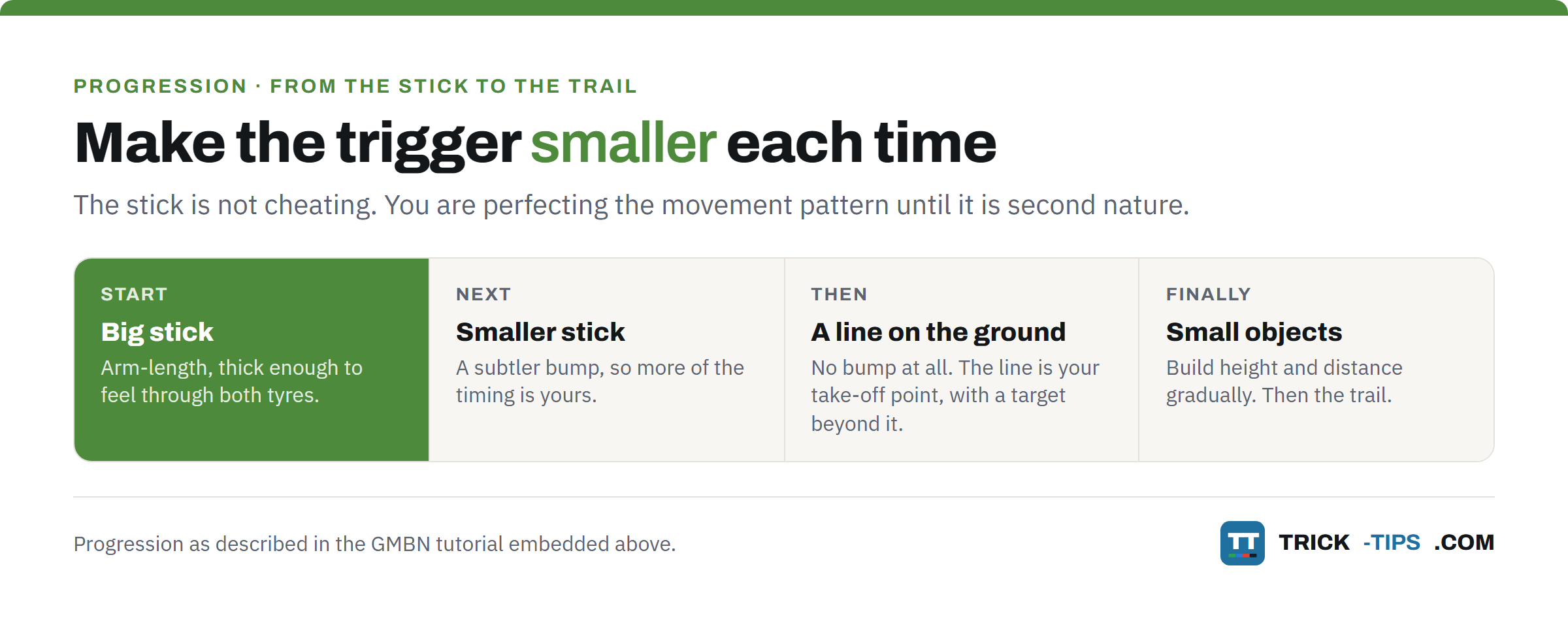
When the movement starts to feel automatic, downgrade to a smaller stick, so the bump is subtler and you are doing more of the work yourself. After that, ditch the stick entirely and draw a line on the ground instead. The line is your trigger point, and you pick a target beyond it to clear. From there you can start laying down small objects to hop over and gradually build height and distance. The stick can feel like cheating, but as the video says, what you are actually doing is perfecting the movement pattern until it is second nature.
Common mistakes to avoid
- Riding at the stick with straight arms and legs. No coil, no spring. Get into the pounce position early, the moment you spot your target.
- Trying to do both wheels at once from day one. The video is deliberate about this. Drill the front wheel lift on its own first, then add the rear.
- Pulling up where the obstacle is, not before it. The take-off point and the target are two different places. The stick teaches you exactly how far back your take-off needs to be.
- Landing stiff. Stretched arms and legs on impact send every force straight through you. Bend and absorb.
Where do you actually use a bunny hop?
More places than you would think, which is why it is worth the practice time. Hopping logs and roots is the obvious one, but the same technique pre-jumps rollers, clears water bars, and even moves the bike sideways to change line at speed. It is also a flow tool. Over a patch of bedded roots, a quick hop keeps your momentum where braking and bouncing through would kill it. Once it is second nature you will find yourself using it constantly, often without deciding to.
What should you learn next?
The bunny hop sits in the middle of a family of skills that all feed each other. If the front wheel lift is holding you back, work on your wheelies. To generate speed from the trail the same way a hop clears obstacles, learn how to pump. And when you are confident getting both wheels off the ground, drops are the natural next step.
Beyond the video: extras worth knowing
A few things the video does not cover that will save you some head-scratching.
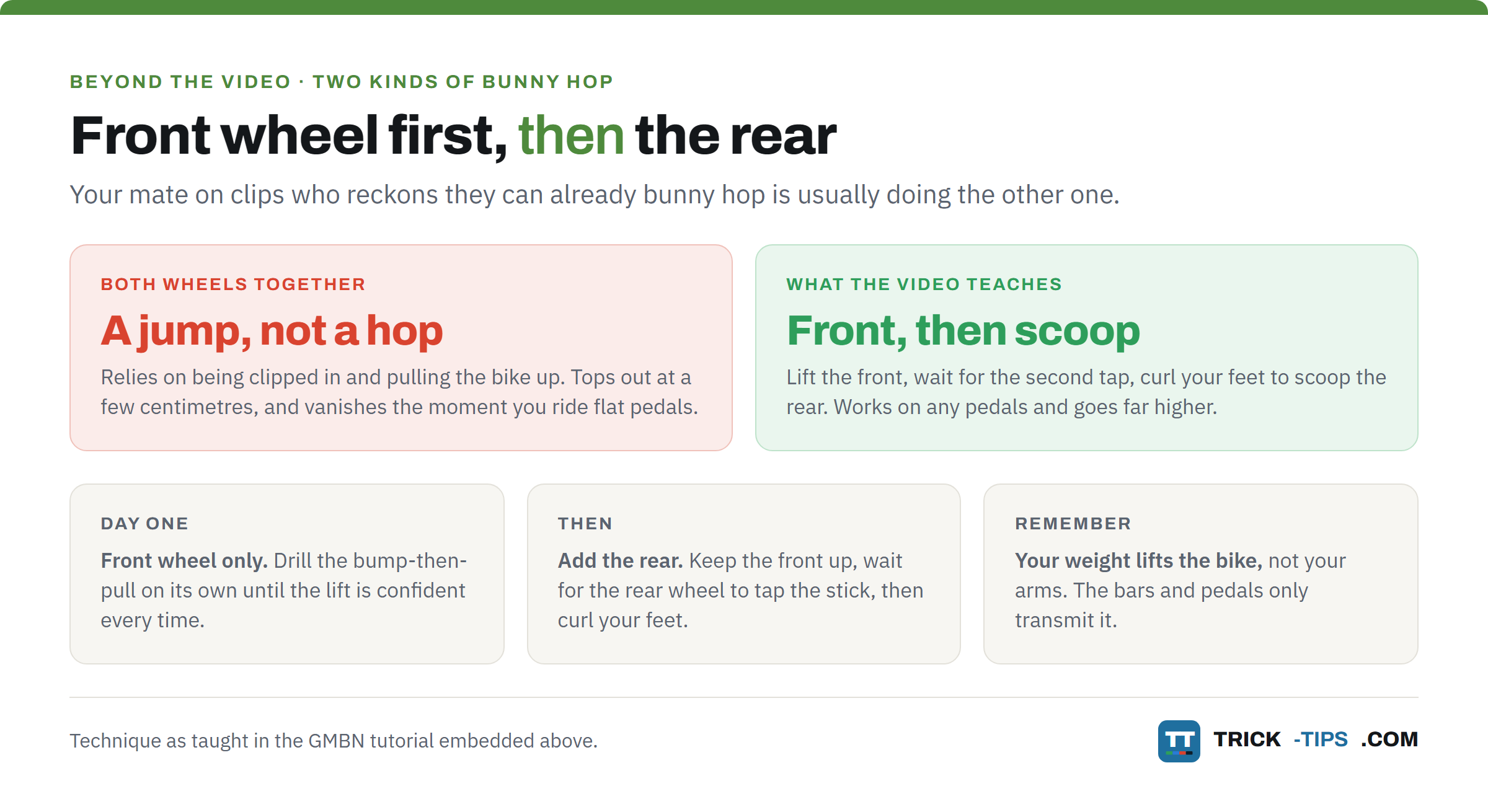
- There are actually two kinds of bunny hop. The one in this video, front wheel first then scooping the rear, is the proper technique. It works on any pedals and goes far higher. The other kind, jumping both wheels up together, mostly relies on being clipped in and tops out at a few centimetres. If a clipped-in mate reckons they can already bunny hop, this is usually why their hop disappears on flat pedals.
- It is your body weight that lifts the bike, not your arms. The spring comes from shifting your weight explosively, the bars and pedals just transmit it. If you are heaving with your arms and getting nowhere, that is the missing piece.
- Struggling with the front lift? Go and pump first. The loading and unweighting that drives a bunny hop is the same movement as pumping the trail, and it is easier to learn there. Ten minutes on pumping technique pays straight back into your hop.
- Check your tyres before a session. A firm tyre springs you up off the stick. A squishy one deadens the pop and risks smacking your rim when you start hopping onto and over real obstacles. If your pressures are at the soft end for grip, add a little air for practice.
Bunny hop FAQs
How long does it take to learn to bunny hop a mountain bike?
With the stick method most riders get both wheels off the ground in their first session, often within the hour. A genuinely useful hop, one you can time over real obstacles on the trail, usually takes a few weeks of short, regular practice. Drill the timing little and often rather than in one long session.
Do I need clipless pedals to bunny hop?
No, and it is better to learn on flat pedals. Flats force you to learn the real technique of curling your feet to scoop the rear wheel up. Clips let you cheat by pulling the bike up, which falls apart the moment you ride flats and teaches poor habits.
Why can’t I get my back wheel up?
Almost always a timing problem. You need to wait for the rear wheel to reach your trigger point before curling your feet, and most people rush it. Go back to the stick. The tap of the rear wheel hitting it tells you the exact moment to scoop. Keep the front wheel up while you do it.
What size stick should I use to learn?
Start with something substantial enough to feel clearly through both wheels, roughly wrist-thick, but soft or brittle enough to be safe to roll over. As your timing improves, swap to progressively smaller sticks, then replace the stick with a line on the ground.
Is bunny hopping bad for my bike?
Not if you land well. Bending your arms and legs on impact absorbs most of the force before it reaches the bike. Landing stiff, or repeatedly casing obstacles you did not clear, is what damages wheels and rims, which is another reason to build up height gradually.
Right, go and find yourself a stick. Give it twenty minutes of just the front wheel bump, then another twenty adding the rear, and you will be further along than most people who have been trying to bunny hop for months. Ask any questions in the comments below.


