
You are about to trust your whole body weight to a few strips of webbing, and the shop has thirty of them on the wall in different colours. It is fair to wonder which one is safe.
Here is the short answer. Any harness from a reputable maker, certified to the climbing harness standard, is strong enough. So the choice comes down to three things you can actually check. Does it fit so you cannot slide out of it, does it have the features your kind of climbing needs, and do you know when to retire it?
We will go through all three, plus the one thing every beginner needs telling about the gear loops.
Watch it first
The pick is a three minute guide from Vertical Addiction, a climbing shop in Canmore, where Ben walks through strength, fit, features and retirement in that order. Every harness video we found came from a retailer or a manufacturer, and most of them were a tour of the current models. This one never names a model, never plugs the shop, and spends its time on the part that keeps you safe, which is fit.
It is short, so here is where everything sits. Strength is at 0:25, fit from 0:43, the features worth paying for from 1:27, and when to retire a harness from 2:08. The video is from 2016 and it moves fast, so this guide fills in the detail it leaves out, and checks its numbers against what the manufacturers publish today.
Is any climbing harness strong enough?
Yes, as long as it comes from a reputable maker. As the video says at 0:25, a harness from a proper manufacturer has passed a set of tests, and the UIAA figure Ben gives for the belay loop and tie-in points is at least 15 kN. That is roughly the force of one and a half tonnes hanging off it.
That figure lines up with the standards. Climbing harnesses sold in Europe are tested to EN 12277, and the UIAA’s own harness standard adds little on top of it. The sit harness test pulls 15 kN upwards through the harness and then 10 kN downwards. Black Diamond batch tests its belay loops to the same 15 kN.
The British Mountaineering Council (BMC) goes further. Its guidance says the test forces deliberately go well beyond anything a real fall produces, and that harnesses have never been known to fail for lack of strength. The problems its technical committee does see are buckles threaded wrongly, people clipping into a gear loop instead of the tie-in point, and webbing worn through at the tie-in loop.
If kilonewtons mean nothing to you yet, our guide to understanding forces in climbing explains them, and why a fall puts far more through your kit than just hanging does.
So you do not need to shop on strength. Buy from a maker you have heard of, check the label for the standard, and spend your attention on fit.
How should a climbing harness fit?
The video calls this the most important part of choosing a harness, safety-wise, and it is right. A harness that is strong enough but loose enough to slide off your hips in an upside-down fall is no use to anyone.
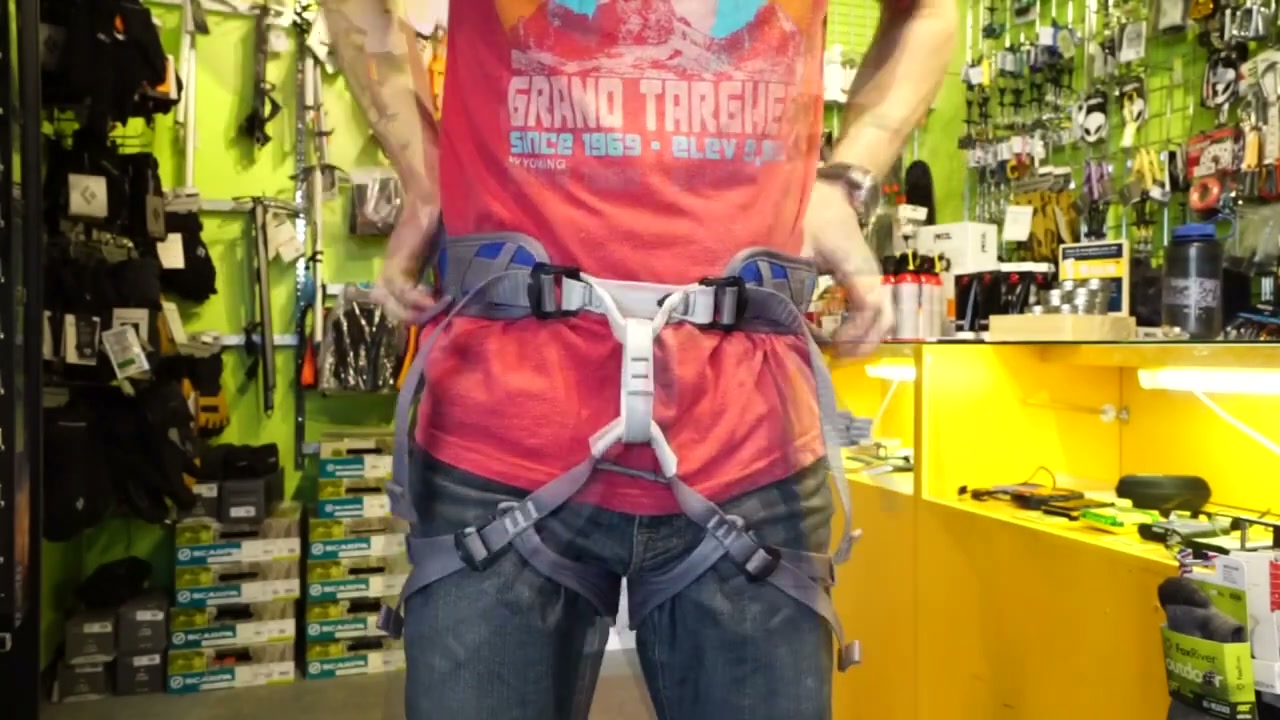
The video’s fit check, from 0:51, comes down to three things.
- The waist belt sits just above your hip bones. Not on them, and not slung low like a belt on jeans. Above them, at the narrowest part of your waist.
- It cannot be pushed down. Ben’s test is to try really hard to push the belt down. If there is any way it would go over your hips, it is too loose.
- A flat hand slides under each leg loop. You should easily be able to slide your hand between the padding and your leg. The leg loops are snug, not tight.
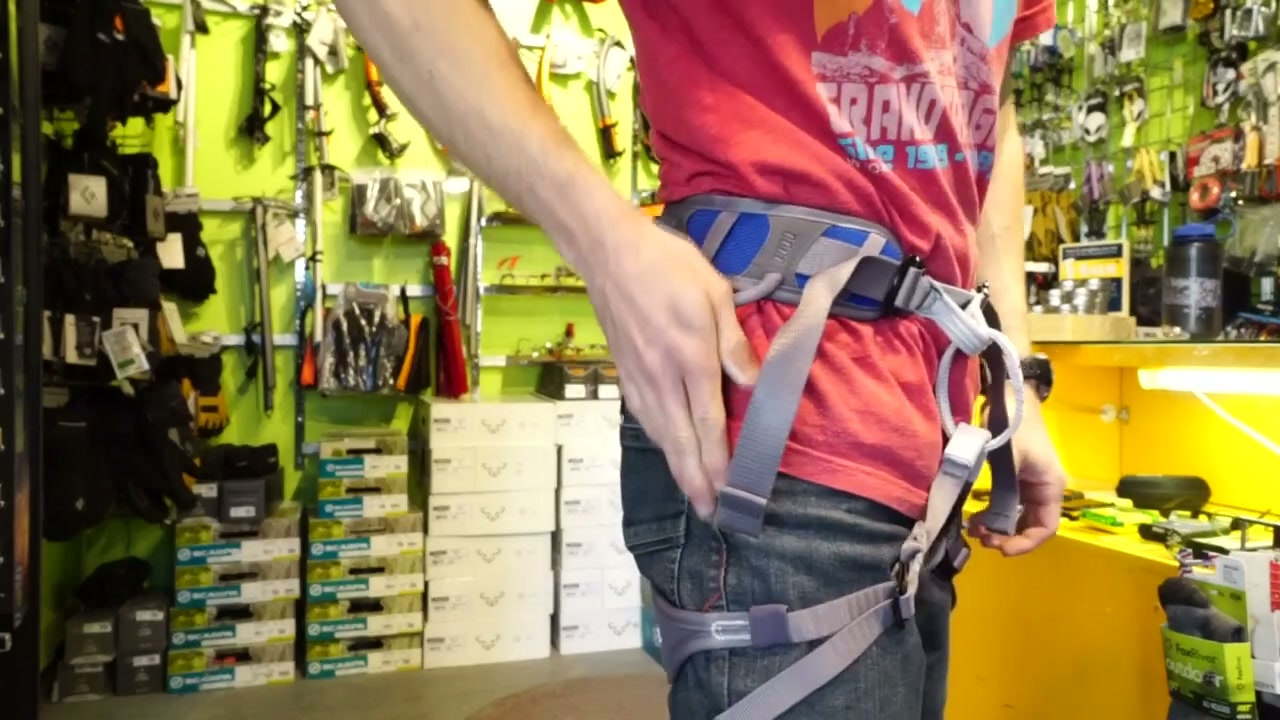
Then a fourth check, at 1:10, that people miss. Look at whether the gear loops sit evenly on both sides once the belt is tight. If they do not, some harnesses have two buckles on the waist belt so you can centre everything, and on others you can rotate the padding round.
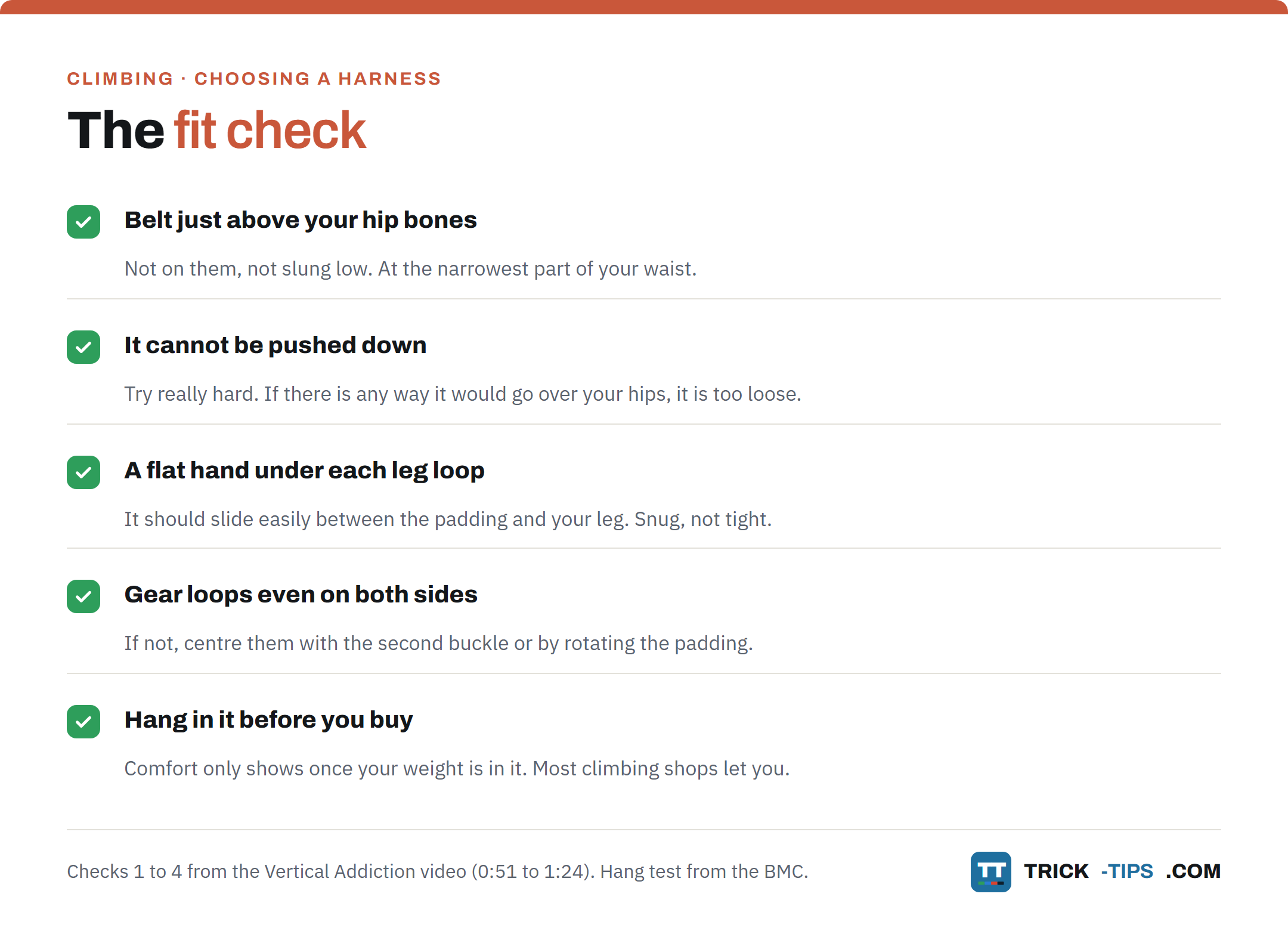
In short, belt above the hips and impossible to push down, a flat hand under the leg loops, and gear loops even.
Which features do you need for your kind of climbing?
Once a harness fits, features follow from where you climb. The video runs through four kinds of climbing from 1:27.
| What you climb | What to look for | Why |
|---|---|---|
| Indoor walls and sport climbing | Light and streamlined | It should not restrict how you move |
| Trad and multi-pitch | A sturdier harness with plenty of gear loops | You carry a full rack, and it still has to feel comfortable |
| Ice climbing | Slots on the waist belt for ice clippers, and adjustable leg loops | Clippers carry ice screws. Adjustable leg loops fit over winter layers |
| Ski mountaineering | Light, packable, and goes on without stepping into it | You are often putting it on in the mountains, not at the bottom of a wall |
Table: Features by discipline, from the Vertical Addiction guide, with the leg loop point from the BMC.
The one decision that cuts across all four is fixed or adjustable leg loops. According to the BMC, fixed leg loops are lighter, more compact and quicker to put on, which suits general rock climbing. Adjustable ones let you add layers and put the harness on without stepping through the leg loops, which is why winter and mountaineering harnesses tend to have them.
Most first harnesses get bought for the wall, and a light sport harness does that job. When you start carrying the kit in our guide to nuts and cams, that is when a trad harness with more gear loops earns its extra weight.
Where does the load go?
A harness has three kinds of loop at the front and sides, and only two of them are built to hold you.
- The tie-in points are the two reinforced loops, one on the waist belt and one joining the leg loops. The rope goes through both of them, following the same path as the belay loop. Petzl recommends tying in through both, because they are reinforced to take the rope rubbing through them over and over.
- The belay loop joins the tie-in points. It is where your belay device clips in.
- The gear loops round the sides are for carrying kit and nothing else.
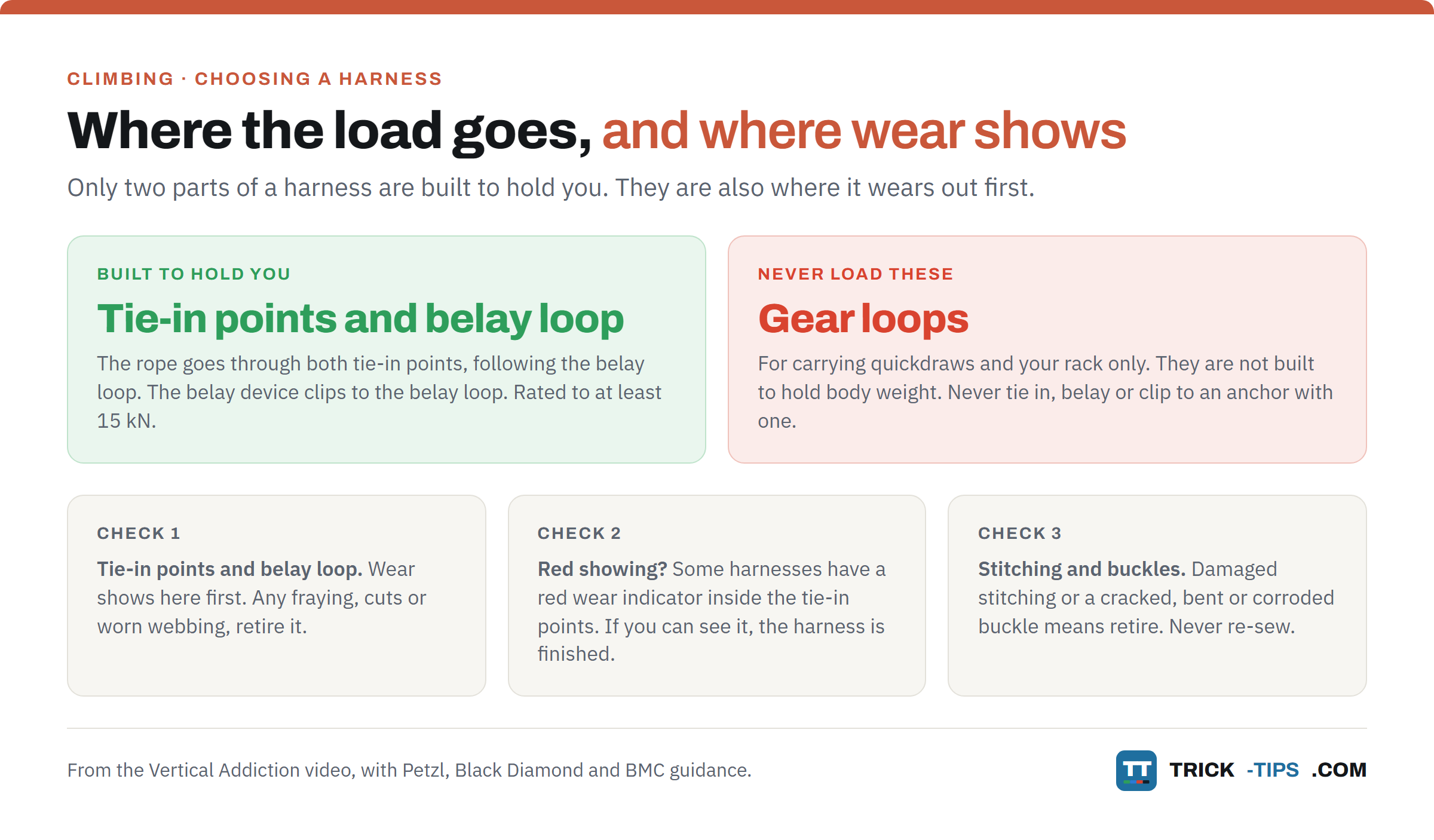
Never clip into a gear loop
Gear loops are not built to hold your body weight. Black Diamond’s instructions say they are for gear only, and the BMC says plainly that they are not strong enough for anything else. Never tie into one, belay from one, or clip yourself to an anchor with one. They are for quickdraws and your rack, and that is all.
This guide and the video are about choosing a harness, not about using one. How to tie in, belay and clip to an anchor is something to learn in person from a qualified instructor or at your climbing wall, not from an article.
When should you retire a climbing harness?
This is the question Ben says the shop gets asked most, at 2:08. His answer has two parts, where to look and how long a harness lasts.
Where to look. Wear shows first at the tie-in points and the belay loop (2:13). Some makers put a piece of red material inside the high-wear zone (2:23), and Petzl, for one, builds a red wear indicator into the tie-in points of some of its harnesses. If you can see the red, the harness is finished.
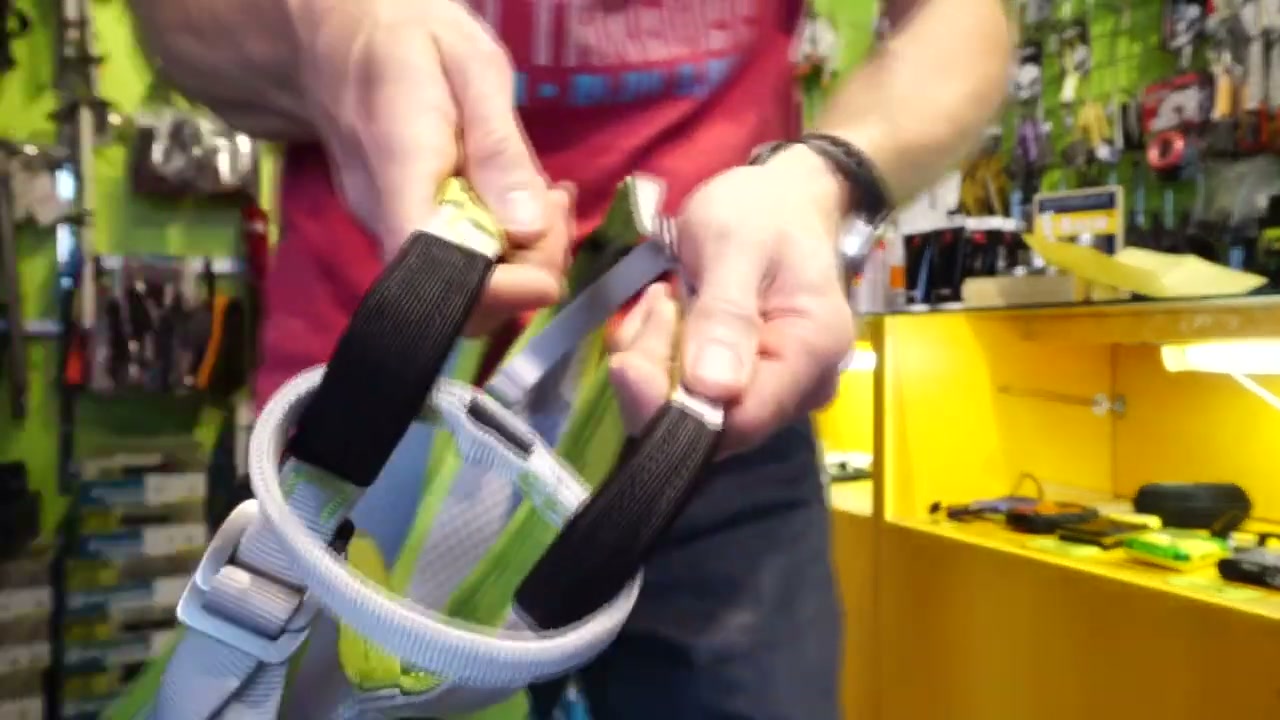
Black Diamond and the BMC list the other signs. Retire a harness with any cut, tear or hole in the webbing, damaged or frayed stitching, heavy abrasion, webbing that is burnt, melted or faded by sunlight, or a buckle that is cracked, bent or corroded. Never try to sew damaged stitching back together. Retire the harness instead.
How long it lasts. Ben says a harness in normal use should be replaced after 3 or 4 years, and that one stored unused in ideal conditions should not be used once it is more than 10 years old (2:28). Here is how that compares with what the manufacturers and the BMC publish.
| Source | With regular use | Even if never used |
|---|---|---|
| The video (Vertical Addiction, 2016) | 3 or 4 years, and possibly a lot less | 10 years, stored in ideal conditions |
| Black Diamond | About three years, longer or shorter depending on how often and where you climb | Retire it after ten years of proper storage |
| Petzl | No set figure. Inspection decides | Ten years from the date of manufacture, at most |
| DMM | No set figure. It must keep passing inspection, and that may mean a single use | Ten years from the date of manufacture, at most |
| BMC (its guidance as published by the UIAA) | Around five years with average use, but as little as a few months, or a single use | A maximum shelf life of around ten years |
Table: Harness lifespan by source. None of these is a guarantee.
So the sources agree on the ceiling. Ten years is the most any of them will give a harness, used or not. Where they differ is normal use, which runs from about three years (Black Diamond, and the video’s three or four) to around five (the BMC). The honest answer is that inspection decides, and the years are only the outer limit.
A big fall can end a harness early too. Petzl says to retire one after a major fall or load, and Black Diamond warns that a harness may be ready for retirement after a severe fall even when it looks fine. Both make the same last point. If you have any doubt about a harness, retire it.
Ben finishes at 2:43 by pointing to Black Diamond’s own testing, and their write-up on worn belay loops is a good read if you want to see what damaged loops actually held in the lab.
Beyond the video
A few things the video does not cover, each one checked against more than one source.
- Hang in it before you buy it. A harness that feels fine standing in the shop can be miserable once your weight is in it. The BMC recommends spending some time hanging in a harness in the shop, and most climbing shops have a rope or a hanging point for it. The most padded harness on the wall is not always the comfiest to hang in.
- Check the year of manufacture on the label. Petzl and DMM count their ten years from the date the harness was made, not the day you bought it, so a harness that sat in a stockroom for two years has already used two. The harness standard requires the year of manufacture to be marked on the harness.
- Second-hand is a gamble. DMM’s instructions say the user should know the harness’s history, meaning its use, storage and inspections, and Black Diamond and Petzl both say to retire a harness whenever its reliability is in doubt. With a harness from a stranger, you cannot know any of that.
Where this sits in the gear guide
- Climbing shoes are the other thing almost every beginner buys first.
- Understanding forces explains the kilonewton figures on every label in this series.
- Belay devices and ropes are what clip into and tie into the harness.
- Slings and webbing and protection are what ends up hanging off the gear loops once you climb outside.
- The BMC helmet guide covers the other piece of kit you will want on a crag.
Frequently Asked Questions
How tight should a climbing harness be?
Tight enough that the waist belt cannot be pushed down over your hip bones, however hard you try. The belt sits just above the hip bones, at the narrowest part of your waist. The leg loops are looser, snug enough that a flat hand slides between the padding and your thigh.
How long does a climbing harness last?
It depends on how much you climb, and inspection decides. Black Diamond suggests about three years with normal use and the BMC around five, while Petzl and DMM set ten years from the date of manufacture as the absolute limit, used or not. Retire it sooner if the webbing, stitching or buckles are damaged, or after a big fall.
Do I need a different harness for indoor and outdoor climbing?
Not to start with. A light, streamlined sport harness suits the wall and outdoor sport routes. You only need something sturdier with more gear loops once you are carrying a trad rack or climbing multi-pitch.
Is the belay loop strong enough to hold a fall?
Yes. The video gives the UIAA figure for the belay loop and tie-in points as at least 15 kN, roughly the force of one and a half tonnes, and Black Diamond batch tests its belay loops to that figure. The gear loops are the part that is not strong enough, and they are for carrying kit only.
Should I buy a second-hand climbing harness?
It is a gamble, because you cannot know its real age, how it was stored or what falls it has taken. DMM says the user should know a harness’s history, and Black Diamond and Petzl both say to retire a harness whenever you have doubts about it.
What size climbing harness should I get?
The one that passes the fit check on your body. Sizes vary between brands, so try it on in a shop and hang in it before you buy rather than going by the label.
In short
Any harness from a reputable maker is strong enough, so choose on fit. Belt above the hip bones and impossible to push down, a flat hand under each leg loop, gear loops even. Pick features for where you climb, never hang off a gear loop, and retire it when the tie-in points or belay loop show wear, after a big fall, or at ten years from manufacture at the very latest.
If you are buying your first one, try on three or four in a shop, do the fit check on each, and hang in the one you like before you pay for it.
Ask any questions in the comments below.